


I just finished watching all eight Mission: Impossible movies, and I must say: Tom Cruise (or rather, Ethan Hunt) has lowkey been running circles around James Bond for almost three decades.
I’m half joking. I don’t really mean to pit one franchise against the other. I haven’t seen all the Bond films in the same timespan. Bond has six decades of history, humongous cultural gravity, an amazing theme song like no other. The franchise has grossed nearly $8 billion worldwide across 27 films. Mission: Impossible, starting thirty-four years later with a fraction of the mythology, has pulled in over $4.35 billion across just eight films. Both of them have recently closed out on a bad note relative to their peak, except Bond will continue perpetually.
Contents:
Failing With Dignity
One Franchise, Many Directors, One Constant
Bond’s Corporate Decline
Can Denis Villeneuve Revive James Bond?
The Case for Cavill (Even If It Won’t Happen)
What Bond Needs Now
Failing With Dignity
Mission Impossible, even when it fails, fails by trying something genuinely new and exciting, constantly attempting to push the boundaries of filmmaking. The James Bond franchise seems comparatively risk averse and needs more of that energy. I’m still going through older Bond films, so I’ll try to keep this comparison brief.
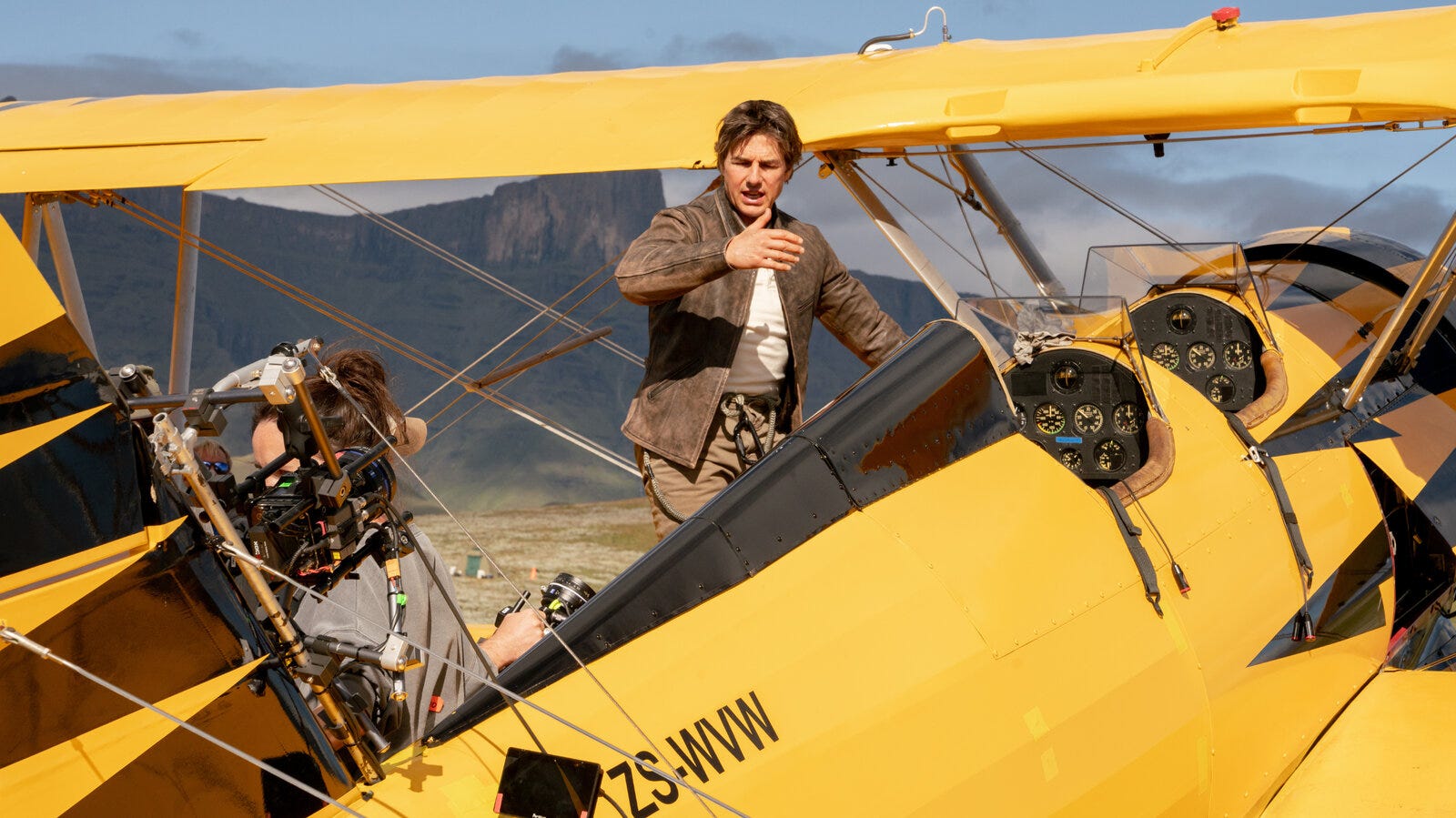
What makes the Mission: Impossible series remarkable compared to other franchises and major IPs is the overall level of craft and attention to detail. Yes, Dead Reckoning and The Final Reckoning represent a dip. The pandemic and the writers’ strike hurt them. They both lost money. But even in those two films, the stunt work alone is groundbreaking. Tom Cruise burned through parachutes, set Guinness records, and threw his 62-year-old body at sequences that no other actors have ever attempted. When someone is physically doing the thing you’re watching, your body knows. Your grip tightens. The stakes register differently. You can tell the difference. The Bond films still have some phenomenal action scenes, but with obvious stunt doubles where necessary, even though Craig did more of his own stunts than most actors. And the stunts don’t push the boundaries half as much.
One Franchise, Many Directors, One Constant
What Cruise understood, and what the Bond producers never quite figured out, is that a franchise benefits from genuine reinvention and obsession with the details. The first four Mission: Impossible films had four different directors. Brian De Palma made the first one a paranoid thriller. John Woo turned the second into a stylish Hong Kong-flavored spectacle. Then J.J. Abrams brought in a strong love interest and Philip Seymour Hoffman was the franchise’s most memorable villain. Brad Bird, the Ratatouille director making his live-action debut, delivered Ghost Protocol which rejuvenated the franchise with its Burj Khalifa set piece.
"Do you have a wife? A girlfriend? Because if you do, I'm gonna find her. I'm gonna hurt her. I'm gonna make her bleed, and cry, and call out your name. And then I'm gonna find you, and kill you right in front of her." — Owen Davian (Mission: Impossible III)
Hoffman in MI:3 was unbelievable. At the time, he hadn’t done any major blockbuster roles of that caliber.
Then Christopher McQuarrie took over for the last four. Yet each film still felt distinct. Rogue Nation is Rebecca Ferguson’s arrival, and she steals that movie. It also had the amazing underwater sequence. Fallout is the peak: the best action, the best stunts integrated into the best story, the best soundtrack, the best catharsis. Henry Cavill cooks as August Walker. Vanessa Kirby as the White Widow. Fallout grossed $791 million and remains the series’ peak for a reason. Everything works.
Through all eight films, the constant is Cruise himself. Producer, star, stunt performer, quality control. The franchise exists because of him. That level of ownership is vanishingly rare, and across 28 years it produced a miracle: a blockbuster series that got better as it went, peaked in its sixth entry. But unlike Bond, even when it stumbled, Mission stumbled while doing things that have never been done before.
And the music grew on me. I’ll admit it. Hearing the iconic Mission Impossible theme swell as Ethan Hunt wins feels as cathartic now as the Bond theme dropping over an end-credits sequence. Each film reworked the melody with its own composer: Danny Elfman, Hans Zimmer, Michael Giacchino, Joe Kraemer, Lorne Balfe.
Bond’s Corporate Decline
Now compare this to Bond since Mission: Impossible entered the picture in 1996. In the same span, Bond has produced nine films across the Brosnan and Craig eras. Casino Royale is a legitimate masterpiece. Skyfall is elite cinema. I’ll never forget watching it in theaters, and Adele’s title track was unforgettable. Javier Bardem was a phenomenal villain. Those two films were Bond at the absolute peak of its powers. They had great soundtracks.
The rest is where Bond's consistency problem shows. No Time To Die starts strong but falls flat as soon as Rami Malek appears on screen (it’s not him, it’s the writing). Billie Eilish’s title track is incredible, although sonically it doesn’t do that much differently or explore much more than Adele’s Skyfall. Hans Zimmer was brought in very late, so while the score has strong elements, it’s far from Zimmer’s best work.
Casino Royale to me stands out as arguably the best Bond movie ever made, and probably the strongest of the era. It came out in 2006, 20 whole years ago. They haven’t come close to writing a character like Eva Green as a Bond girl, and abandoned Chris Cornell’s amazing intro for nonstop moody entries:
Ironically Casino Royale was inspired by Batman Begins as a gritty reboot. But unlike Warner Bros, who fought to keep Nolan till the very end on Dark Knight Rises, Bond’s producers did not follow through and get their Dark Knight because they never handed the vision over to an auteur.

Skyfall should’ve been the last entry in the Craig series and saved for later, but they used it too early and then dragged it on. The overall picture: two all-time Craig peaks in Casino Royale and Skyfall, a Brosnan peak with GoldenEye, with lots of formulaic filmmaking in between.
The Brosnan era is interesting. Many consider him a poorly utilized Bond. Mission also had 3 consecutive high quality movies between Ghost Protocol and Fallout; a trilogy within a saga. Bond never quite hits that continuity. Going off what I can glean online from consensus and individual reviews: GoldenEye is great. Tomorrow Never Dies (6.4 on IMDb), The World Is Not Enough (6.3), and Die Another Day (6.1) oscillate between fun and forgettable, with Die Another Day currently sitting as the lowest-rated Bond film in IMDb's entire 27-film history (I may change my mind and enjoy the over-the-top style of the Brosnan era, but I’ll save my complete analysis when I’m done watching all the Bonds, for now I assume the consensus is directionally accurate).
Mission: Impossible's eight films average a 7.2 on IMDb. The lowest-rated entry, MI:2, sits at 6.1. The highest, Fallout, hits 7.7. Most of them sit in a remarkably tight band. Bond's nine films across the Brosnan and Craig eras average around 6.9, but with swings: Casino Royale at 8.0 and Skyfall at 7.8 represent genuine peaks, while five of the nine sit at 6.8 or below. Also, 7.3 seems a bit too high for No Time To Die and the rating strikes me as grading it on a heavy curve.
Bond's nine films from GoldenEye through No Time to Die have grossed roughly $5.4 billion worldwide, buoyed enormously by Skyfall's billion-dollar run and the Craig-era prestige bump. Mission: Impossible's eight films have crossed $4.35 billion. Bond has the larger total, but it also had a head start, a deeper cultural footprint, and the most famous theme in action cinema. What's striking is how efficiently Mission: Impossible closed that gap with fewer films, a shorter history, and a fraction of the brand recognition.
That’s three genuinely great films out of eight. Mission: Impossible, in the same period, produced at least five strong entries and two more that are a mess but still worth watching for the craft alone.
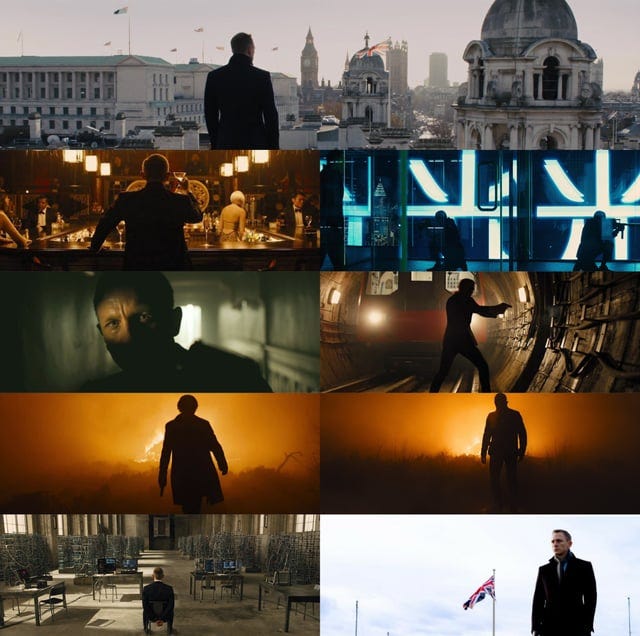
The problem isn’t talent, nor production budget, but direction from the people up top. The Bond franchise has had extraordinary directors, composers, cinematographers. Among the absolute best Great Britain has to offer. Roger Deakins shot Skyfall, and it looks like a painting of London burning. Sam Mendes did a great job on that movie. But Bond has been guarded too cautiously by its owners.
Mendes himself said as much.
"They tend to want someone who's a bit younger, a bit more... malleable, a bit more controllable by the studio." — Sam Mendes, Inverse, October 2024
The track record supports this. For decades, many A-list directors wanted the gig and couldn't get through the door. Steven Spielberg was repeatedly turned down. Christopher Nolan was interested. Quentin Tarantino lobbied publicly. Peter Jackson, Alfonso Cuarón, Matthew Vaughn, Guy Ritchie, all circled Bond at various points. None of them got the call. Bond kept hiring reliable craftsmen who could hit deadlines and take notes. John Glen directed five Bond films. Martin Campbell got two. These are competent directors who made competent films, and that's not an insult to them. But Bond treated directorial ambition as a liability rather than an asset.
Meanwhile, Cruise ran his franchise like a studio head who also happens to jump off buildings. He's been the lead producer on every Mission: Impossible film since the first one in 1996, when he founded Cruise/Wagner Productions and chose M:I as its inaugural project. He has creative control, and according to a Hollywood Reporter investigation, Paramount executives who've worked with him describe the studio's role as, at best, an ability to "influence" Cruise and McQuarrie rather than control them. One exec put it simply: given the money Cruise delivers, who's going to tell him no?
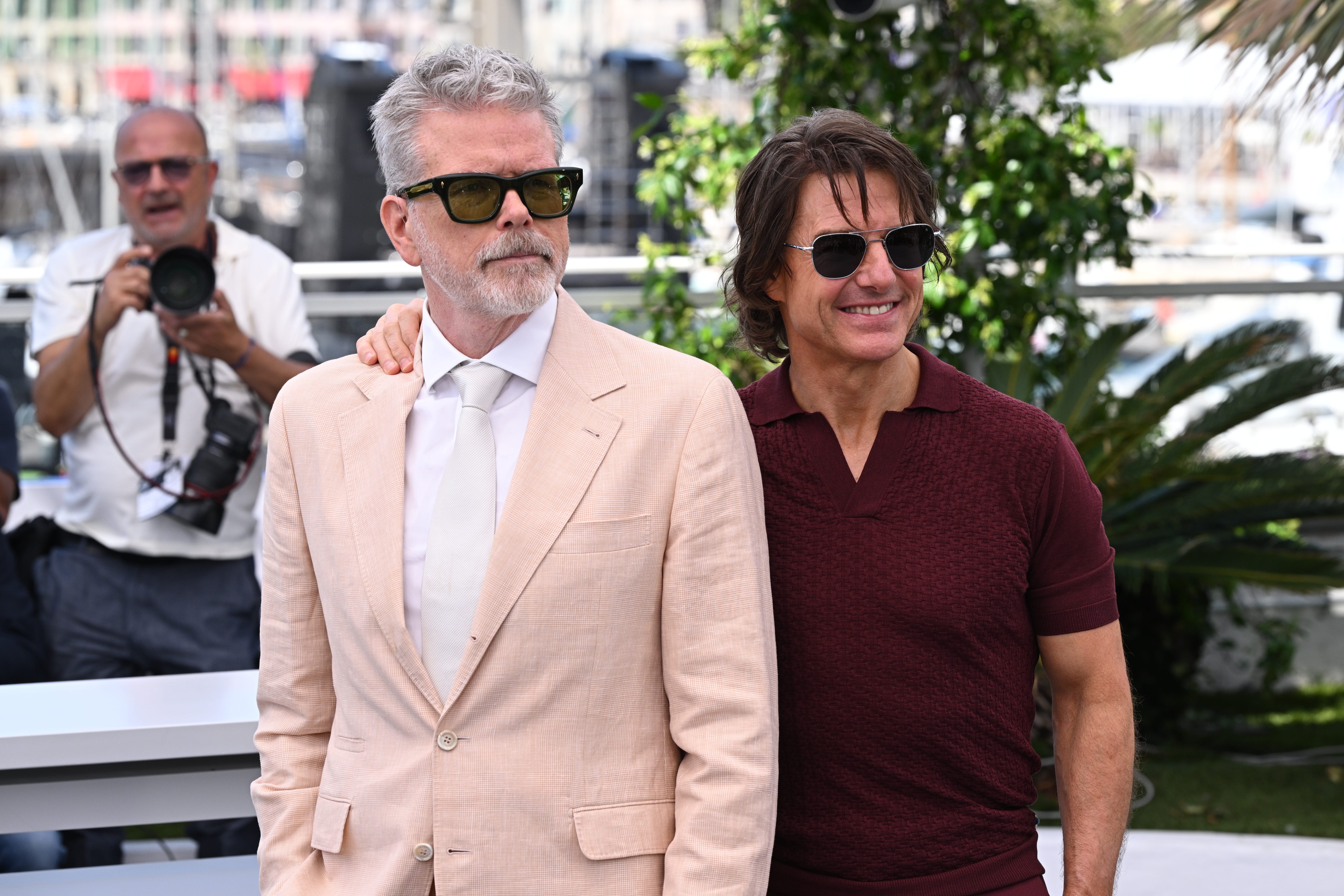
But Cruise used his control to hire people who challenge the franchise. He told interviewers that he began producing the films with a specific goal, that a different director with their own vision would make each one. He hired Brian De Palma, a paranoid-thriller auteur, for the first. John Woo, a Hong Kong action stylist, for the second. J.J. Abrams, a TV showrunner making his feature debut, for the third. Brad Bird, a Pixar animation director who'd never shot live-action narrative, for the fourth. Each time, he picked someone whose instincts ran counter to the previous film. He actively courted variety and then gave those directors room to work, because Cruise understood something the Bond producers didn't: a franchise stays alive by reinventing itself, and reinvention requires directors who aren't fully controllable.
Even when he found Christopher McQuarrie, a writer-director who became his primary creative partner after McQuarrie replaced Paula Wagner in that role, he continued to differentiate each movie. McQuarrie first contributed uncredited rewrites on Ghost Protocol during production, then directed every film from Rogue Nation onward. He also made Tom Cruise’s underrated Jack Reacher movie. Their working method, as the Hollywood Reporter described it, is surprisingly improvisational: they added a submarine sequence to Dead Reckoning after the film was supposedly wrapped. They hold onto unfinished cuts to preserve flexibility. They take an approach that would give most studio accountants an aneurysm.
But most importantly, they constantly innovate and push the boundaries. You can respect their films for not taking you, the audience, for granted and spending money and time and energy to truly push the filmmaking craft forward. In that regard, Mission: Impossible is far superior to any generic corporate schlop like the Star Wars and Marvel universes.
Bond never had a Tom Cruise. It had a committee.
Can Denis Villeneuve Revive James Bond?
This is why the Villeneuve announcement matters more than any Bond news in a generation. Amazon MGM appears to be taking yet another big swing.
Denis Villeneuve was confirmed as the director of Bond 26 on June 25, 2025. Steven Knight, the mind behind Peaky Blinders, is writing the script. Amy Pascal and David Heyman are producing. Barbara Broccoli and Michael G. Wilson, the family that stewarded Bond since GoldenEye in 1995, have stepped down. Amazon paid roughly $1 billion for full creative control. The entire power structure has shifted for the first time in thirty years.
Villeneuve is the first genuinely auteur-level filmmaker to helm a Bond film since... ever, arguably. Mendes is a great director, but for me Villeneuve operates on a different level. He knows how to make large-scale cinema feel intimate, intense and epic at the same time: Prisoners, Sicario, Arrival, Blade Runner 2049, Dune, Dune: Part Two. He’s currently finishing Dune: Messiah before turning his full attention to Bond. He’s proven, repeatedly, that he can take established IP and revolutionize it further. Blade Runner 2049 is a three-hour sequel to a forty-year-old cult film, and it works as both homage while being visually distinct in its own right. The Dune films turned a notoriously unadaptable novel into one of the greatest works of science fiction ever. If anyone can crack Bond open and find something new inside without destroying what makes it Bond, it’s him.
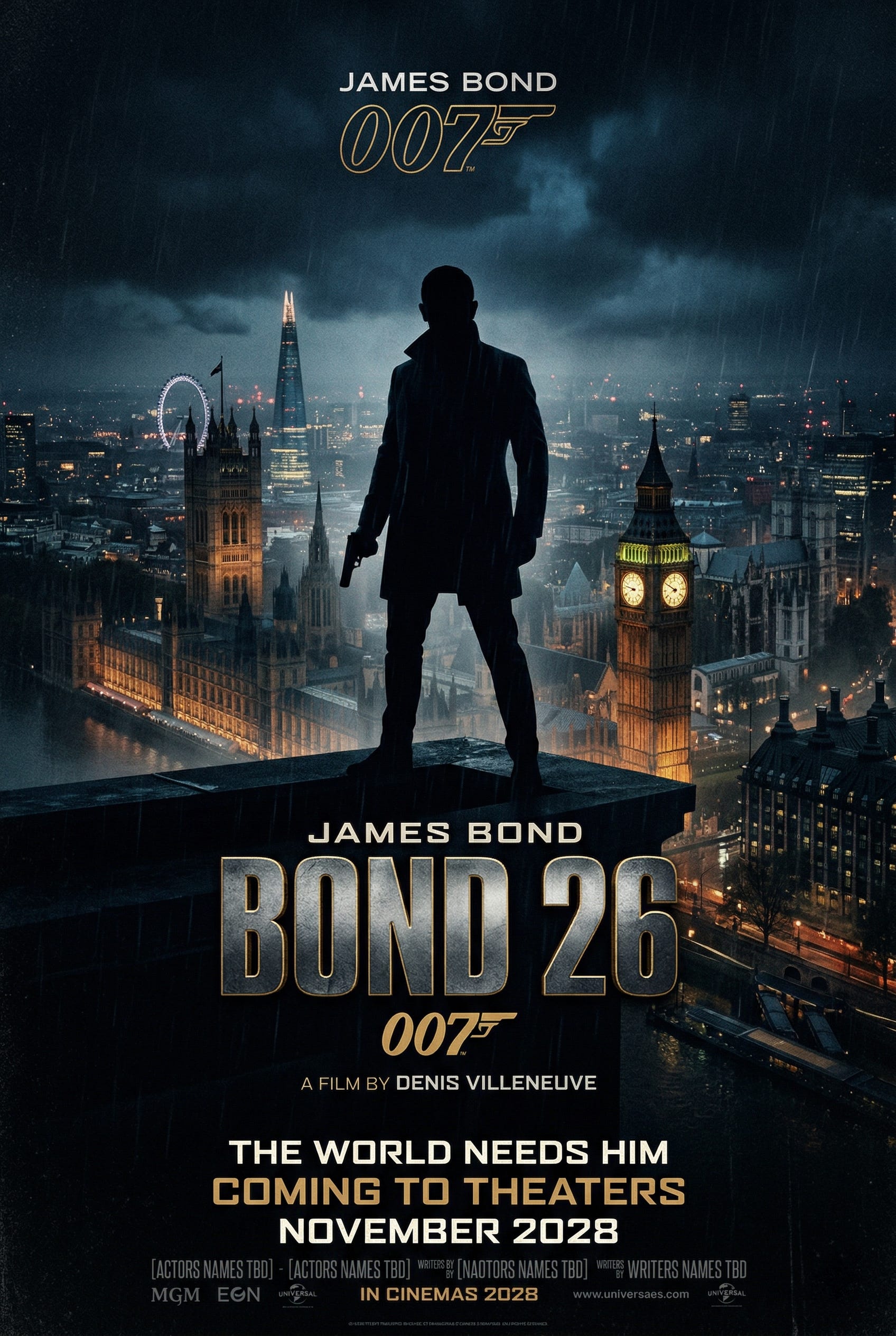
The reports say he won’t have final cut, which is standard for Bond and the thing that has historically scared off bigger directors. Whether Villeneuve can work within those constraints, or whether he’ll butt heads with Amazon the way Danny Boyle clashed with the corporate regime on No Time to Die, will determine everything. But even Villeneuve operating at 80% capacity produces work that most directors can’t touch at their peak.
And his collaborators matter. He’s worked with Hans Zimmer on his last three films. He’s worked with cinematographers Greig Fraser and Roger Deakins. His editor Joe Walker has cut his last five films. Villeneuve’s presence signals a heightened level of ambition.
Knight is a smart choice for the script, too. His work on Peaky Blinders lives in the same space Bond should: violence with style, characters who are charming and ruthless and scarred by both. He told Radio Times in January that working on Bond was like working with a character of folklore, comparing 007 to Robin Hood. That’s the right instinct. Bond is an idea that gets recast every decade. The question is always what the idea means now.
The Case for Cavill (Even If It Won’t Happen)
The reports from Deadline say Villeneuve wants an unknown. A British actor in his late 20s or early 30s. A fresh face. This rules out nearly every name the internet has speculated about: Timothée Chalamet, Glen Powell, Tom Holland, Aaron Taylor-Johnson, Jacob Elordi. And it reportedly rules out Henry Cavill, who’s 42 and far too famous.
Casting an unknown worked brilliantly with Daniel Craig. It can work again. But Cavill is right there, largely underrated, and what he brings to the table is exactly what Bond needs. At the very least, he should be considered as a villain, or even a recurring villain.
Watch him in Mission: Impossible Fallout. Or as Superman. Watch the physicality, the way he fills a frame with presence and menace. He is a Greek god in the most literal casting-director sense of the term, but he can act, too. I need to watch The Man from U.N.C.L.E. I’ve heard that’s Bond.
There’s a silly debate circulating online about Henry Cavill and Timothee Chalamet. They’re different archetypes entirely. Chalamet is a great talent and I loved him as Paul Atreides in Dune, but he’s not Bond. Tom Holland is Spider-Man (though, I don’t even think he’s that good as Peter Parker). He’s not Bond. Bond requires a specific kind of masculine gravity. A physical authority. An ease with violence and charm in equal measure. Cavill has all of it. I can’t wait for his In the Grey coming out in May with my GOAT Jake Gyllenhaal, another Guy Ritchie joint. I don’t even care what the movie is about. I’ll watch it for Jake and Henry:
The fact that Chalamet gets compared to Cavill at all is a symptom of something bigger. A generation of men with declining testosterone levels and women whose hormonal profiles have been altered by decades of widespread birth control use have shifted what 'attractive' even means at a population level. Chalamet is a good actor. But the idea that he occupies the same physical category as Cavill would have been laughable thirty years ago. Cavill looks like he was engineered to play these roles. Broad shoulders, square jaw, a frame that communicates authority before he opens his mouth. Chalamet looks like he'd lose most fights. That’s what happens when a culture's hormonal baseline shifts and the definition of 'leading man' changes with it. Evie Magazine covered this well. The comparison only exists because the audience changed, not because the standard did Evie Magazine discussed this well in their article:
“If You’re Into Timothee Chalamet, Harry Styles, And LilHuddy, Then You Might Be On The Pill”


Maybe the unknown-actor approach protects the franchise’s economics. A massive star commands a massive salary. An unknown becomes Bond, and Bond becomes their identity. That’s how Connery worked. That’s how Craig worked. Villeneuve understands that the character should be bigger than the actor. I get it. I just think Cavill would be special, and sometimes you have to cast the person who’s already proved they can do the thing rather than betting on potential.
What Bond Needs Now
The franchise needs three things, and Villeneuve can deliver all of them.
First: a genuine vision. Not a committee-approved corporate product that is trying not to offend people, but a film that feels like one person’s idea of what Bond should be. Villeneuve’s Dune films are proof he can build rich worlds. Bond needs that. The Craig era’s best moments, Casino Royale and Skyfall, worked because Martin Campbell and Sam Mendes brought real directorial identity. The worst moments happened when the franchise felt like it was running on institutional autopilot.
Second: a soundtrack that does real work. Bond music has a rich legacy, obviously. John Barry, David Arnold, Thomas Newman, Zimmer. I loved the Casino Royale and Skyfall scores, and No Time To Die was no slouch. But at times, it feels like the franchise has been coasting on the strength of its theme and its title songs without consistently investing in the score as a storytelling engine the way the best film music should operate. They have some good pieces in every movie, but at points it feels like they don’t really go all out. Villeneuve’s collaboration with Zimmer on Dune produced some of the most inventive film scoring in recent memory. If Zimmer returns for Bond, or if Villeneuve brings in someone equally ambitious, that would be great.
Third: respect for the audience’s intelligence. The best Bond films trust the viewer. Casino Royale’s poker game works because it assumes you’ll follow the emotional stakes even if you don’t know Texas Hold’em. Skyfall works because it weaves and twists. The worst Bond films treat the audience like children who need explosions every twelve minutes and a joke every ninety seconds to stay engaged. Villeneuve has never made a film that talks down to its audience.
Mission: Impossible proved that consistency, ambition, and a commitment to physical filmmaking can sustain a franchise for nearly three decades. Tom Cruise did that through sheer force of will and taste. Bond has the deeper mythology, the bigger cultural footprint, and the longer runway. What it’s lacked is someone with the vision and the stubbornness to insist on greatness.
Villeneuve might be that person. If Amazon lets him work, if the film is allowed to breathe with its runtime, and if the casting delivers someone who can carry the character for the next decade, Bond 26 could be the film that rejuvenates the franchise the way Christopher Nolan rejuvenated Batman.