


10/10 (Spoiler Free)
A confident, expensive, self-aware neo-noir that remembers detective stories are supposed to seduce you before they start explaining themselves. Colin Farrell plays John Sugar, a highly competent private investigator with perfect manners and incredible suits. The show’s big genre swing will either sell you completely or lose you cold. For my money, it connects. If you have any tolerance for science fiction, this show cooks. If you hate sci-fi on principle, knock a point or two. Either way, this is the most committed love letter to detective fiction I’ve seen in years.
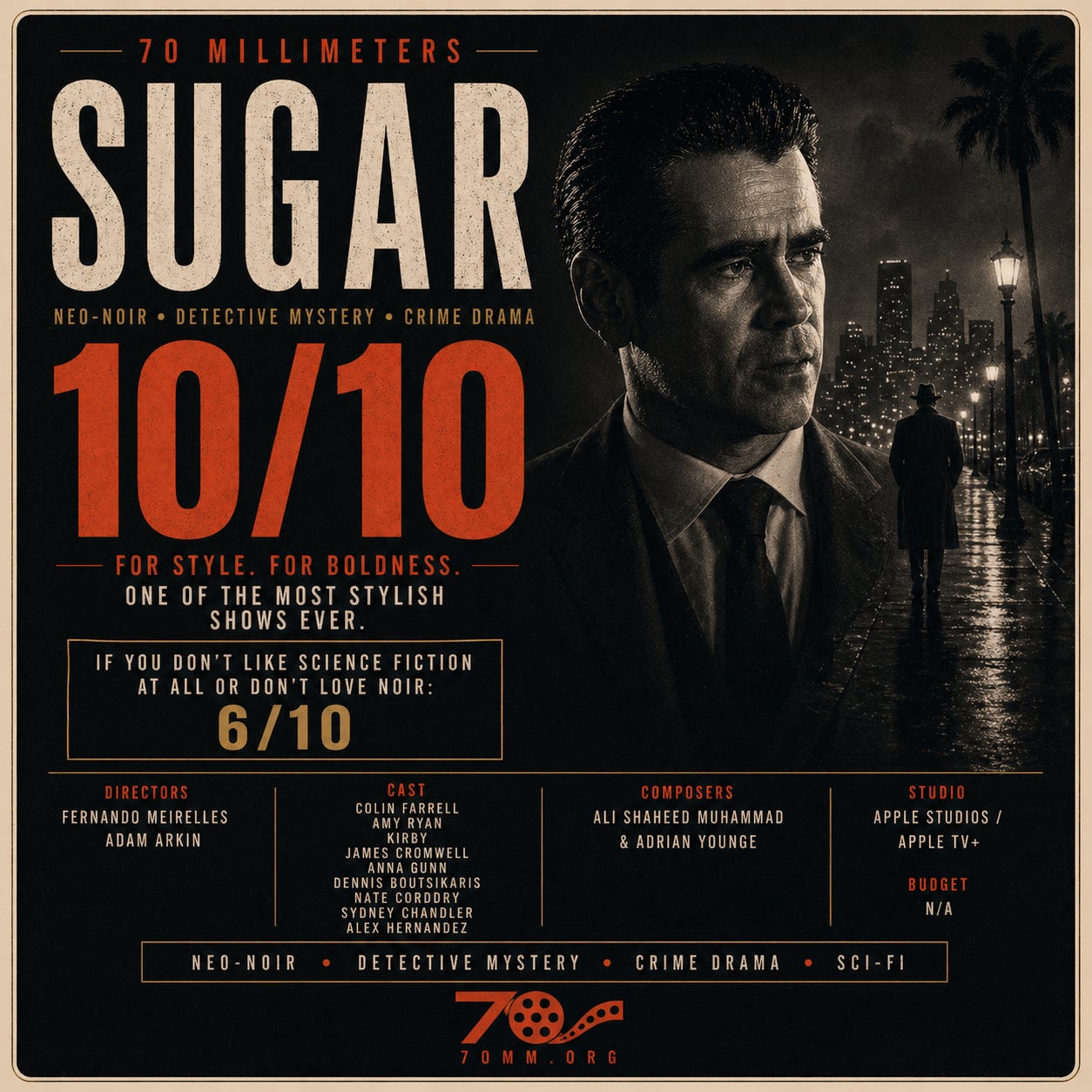
There’s a feeling that arrives almost immediately in Sugar. Colin Farrell’s voiceover starts rolling, the camera moves through Los Angeles like it’s trying not to be seen, and you realize the show knows exactly what it is. And it expects you to know too. This is pure neo-noir. This show oozes more style than almost any other entry in the genre, and for that reason alone, it has become one of my all time favorites.
As a noir addict growing up, Sugar was made in a lab for me. I grew up watching Double Indemnity and The Maltese Falcon in high school because I wanted to make movies. It’s rare to feel like the exact target audience for a show, but here I was, binging it in one night. The Japanese Yakuza references, the self-referential shots of old school noir, the neo-noir dreaminess, it’s all there. With substance, too.
Neo-noir can become cosplay fast. Put a man in a suit, give him a car, toss in a missing woman, dim the lights, and suddenly everyone starts congratulating themselves for remaking Chinatown. Sugar avoids that trap because it truly reveres the genre. It’s thinking through noir from the inside. The old movies are part of the character’s bloodstream. They aren’t mere references for the viewer to catch. They’re the way John Sugar understands the world. It’s beautiful to watch as a cinephile.
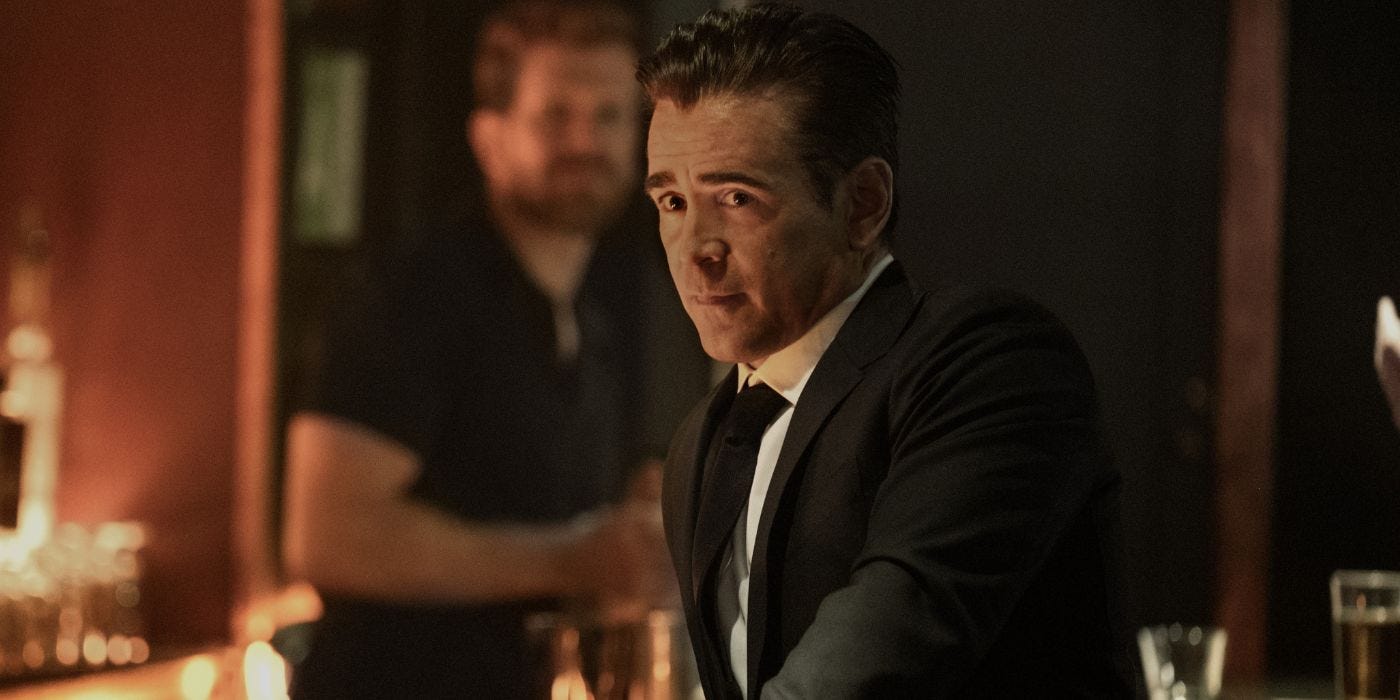
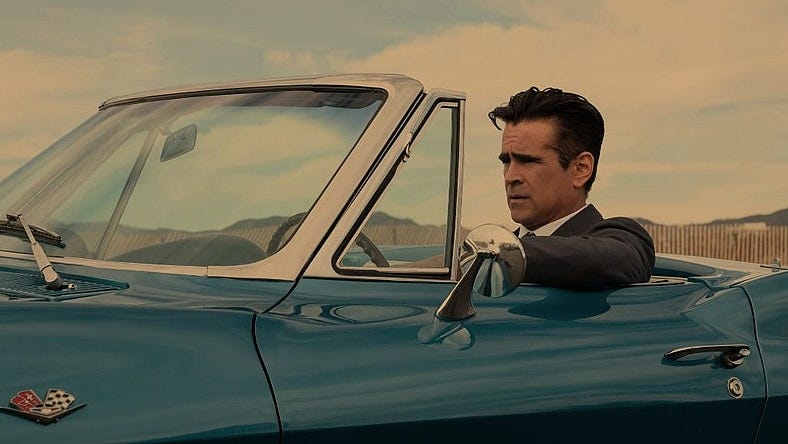
Farrell plays John Sugar as polite, controlled, observant, and almost absurdly capable. He dresses like he stepped out of a mid-century menswear ad. He stays in rich, fancy hotels with incredible room service and aesthetics. A lot of times he feels like Bruce Wayne in a different mood. Money. Manners. Competence. A strange private code.
“I don’t like hurting people. I really don’t.” — John Sugar
Farrell’s voiceover is one of the show’s great pleasures. They are of a man who cannot sleep organizing his thoughts in a bewildering world. A name. A drink. Noticing a lie. A stray thought. His voice has this incredible charisma, the kind of sound that makes you lean in even when he’s saying something simple. It’s very reminiscent of Matt Reeves’ style of voiceover in The Batman.
“Sometimes where someone’s been is the best way to find out where they’ve gone.” — John Sugar
The show understands Los Angeles, or at least a version of Los Angeles that matters for this kind of story. L.A. is trickier to shoot as noir now than it used to be. The glamour of Double Indemnity, Chinatown, and L.A. Confidential lived in a version of Los Angeles that doesn't really exist anymore. Strip malls eat the boulevards. Beautiful old hotels sit next to vape stores. You get dead storefronts, overlit streets, and buildings that look run down in daylight. Junkies in random places. You can still find beauty there. But you have to fight harder for it.
"Tip the world on its side and everything loose lands in Los Angeles. We all have our secrets. Even me. Especially me." — John Sugar
The show’s solution is to make the tension part of the style. New L.A. is neon blue, bruised orange, yellow from streetlights, slick with reflections, and often framed like we’re watching from the wrong side of a window. Old L.A. appears through black-and-white film clips, vintage montages, circular cutouts, and old detective imagery that feels spliced into Sugar’s memory. The contrast gives the show a haunted quality, establishing the mood.
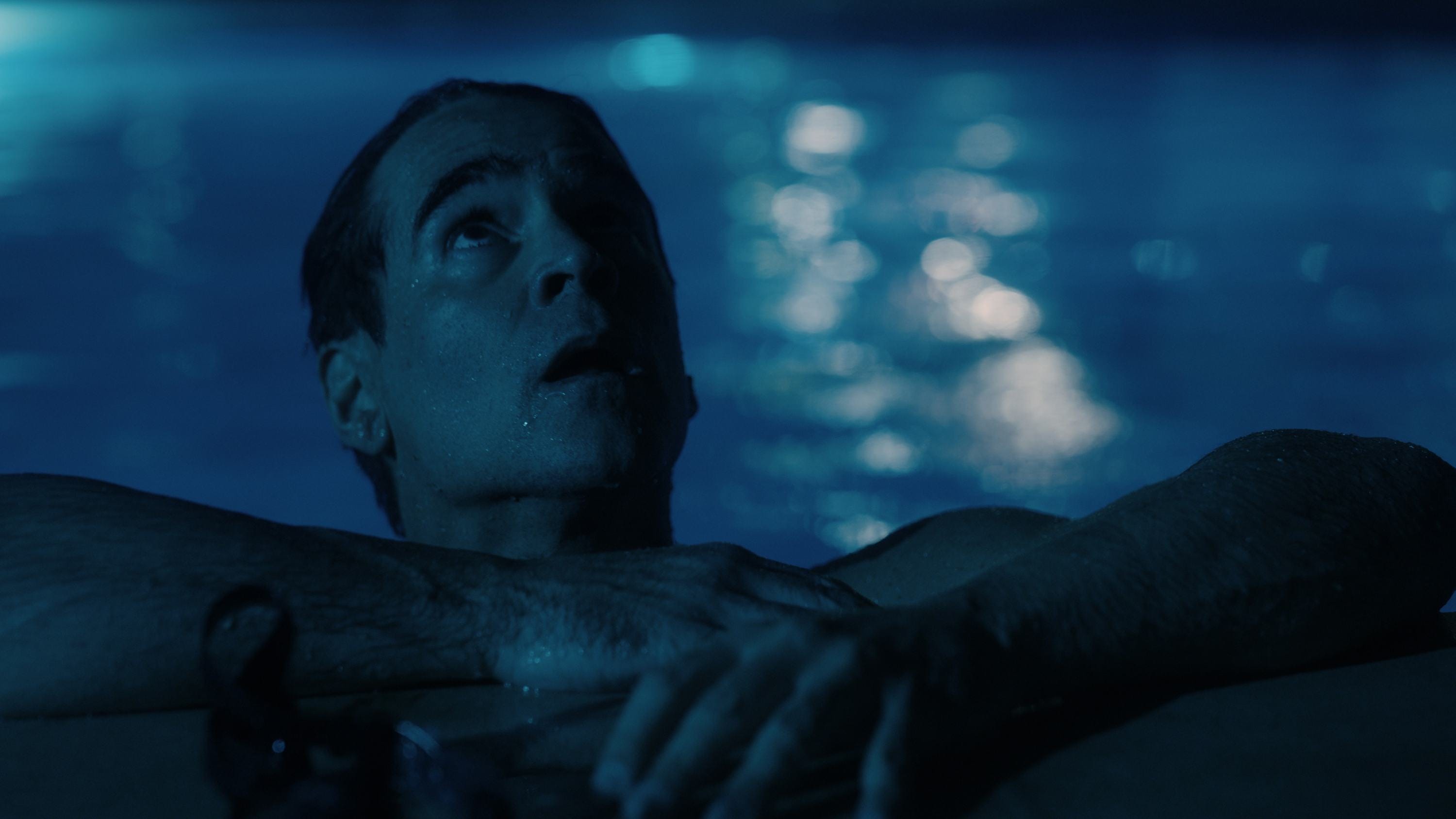
The self-referential nature of the show is just incredible. Constantly nodding to noir, noir tropes, old movies, old classics. I NEED more shows like this. None of the vintage clips and montages feel excessive because they seem to be coming from Sugar himself. The case is being processed through a man who has watched so many movies that he thinks in movies.
“A movie ending is a strange thing. You know it’s coming, and yet, you spent all this time laughing, crying. You’re surprised when the credits roll. But sooner or later, when the lights come on, put on your jacket, it’s time to go home.”
The camera helps. The whole season feels voyeuristic in the right way. The handheld work is shaky but doesn’t feel sloppy at all. The camera often floats near Sugar like a second observer, then pulls back into doorways and corners as if it’s worried about being caught. It utilizes a unique style of editing that suited me as a viewer, watching after a long day at work, looking to get lost in the world of the show near bed.
"I'm one of the good guys. Although, to be fair, out here, good and bad can be in the eye of the beholder." — John Sugar
The world of the show is amazing. It captures the way old Hollywood families, political operators, fixers, publicists, lawyers, addicts, heirs, and hangers-on all end up speaking the same private language. Everyone knows something. Nobody says it straight.
That’s one of the reasons the mystery works even when the show gets stranger. Underneath the genre swing, Sugar is touching something very real: Hollywood power, family loyalty, political access, private issues, and public image all feeding each other until nobody can tell where the crime ends and the lifestyle begins.
Amy Ryan is terrific as Melanie Matthews. A weaker show would’ve turned her into a noir function: the faded woman, the possible lover, the clue dispenser, the person who exists to draw something out of the detective. Here, she is a fascinating character. James Cromwell brings old-Hollywood weight as Jonathan Siegel. He doesn’t need much screen time to suggest a whole industry of secrets behind him. Kirby gives Ruby a clipped unease that becomes more interesting as the season goes on. Anna Gunn, Dennis Boutsikaris, Nate Corddry, and Sydney Chandler all fit into the show’s machinery.
Perhaps the music isn’t exactly Mindhunter nor True Detective level of memorable. But it is so subtle and effective. It’s got a lot of interesting auditory motifs. Silence does a lot of work. Tracks like “Searching & Swimming,” sound like titles from a case file and scenes from someone’s private dream at the same time. I’d play this soundtrack driving alone at night. It sucked me into the story.
The sci-fi element worked for me completely. I know that won’t be universal. Some people want noir to stay grounded. Some people will feel the show changes the terms too late without warning. I get the complaint. I don’t share it.
The strange turn makes the noir more interesting because noir has always been a little unreal. The hats, the shadows, the voiceover, the lonely man walking into a room full of lies, the stylized shots of smoke. This genre was never a documentary. It’s a dream about guilt, desire, money, violence, and the fantasy that one person can make sense of the rot if he asks enough questions, only utilizing real world crimes that many people don’t know about. Sugar takes that even further.
The result feels like True Detective crossed with The X-Files, paired with old Hollywood obsession and Apple TV+ money. That last part is important. This show looks paid for. The suits matter. The rooms matter. The cars matter. The color matters. The whole thing has the confidence of a streamer letting adults make something odd, stylish, and specific without a corporate board sanding off the weird parts.
Once again, a big win for Apple TV+, who backed the show’s bigger idea when, according to executive producer Simon Kinberg, others wanted a more straightforward detective version. No traditional network would have touched it. The economics don't work. The risk is too weird. That's exactly why we got it from Apple.
Good. The straightforward version would’ve been cool. This version rattles around in your head.
There’s something especially good here about men and detective fiction. We keep returning to these introverted narrators because the fantasy is clean: a man who understands every room except the one inside himself. He can spot the lie, follow the clue, read the face, take the punch, and still not know what to do with grief. Sugar’s competence is seductive.
A lot of modern prestige TV asks for patience without giving enough back scene to scene. Sugar kept me there. The voiceover invited me in. The camera made me watch corners. The score kept me company. Farrell made the case feel secondary in the best possible way, because by the end I cared less about the missing-person mechanics than I did about the man trying to solve them.
That’s the mark of a good detective story. When the case is the cherry on top, and the detective’s personality is the meat. John Sugar is not quite Rust Cohle in True Detective, but he’s a legend in his own right.
If you hate sci-fi, Sugar may not climb as high for you. Fair enough. But I loved the gamble. I loved that a show this beautiful was willing to risk looking ridiculous. I loved that it built a gorgeous noir box, then found a hidden door inside it. We don’t get enough quality detective noir anymore, and we get even fewer shows that understand style to this degree. Sugar has style in its bones. Suits, shadows, old clips, neon, voiceover, jazz, loneliness, movie obsession, moral disgust. The whole thing hums.
Enjoy this show before season 2. Don’t read spoilers. Let Farrell’s voice guide you through Los Angeles after midnight. Some shows solve a mystery. This one remembers why mysteries seduce us.