


10/10
A series about the birth of criminal profiling at the FBI's Behavioral Science Unit, based loosely on the real agents who coined the term "serial killer" and built the framework that spawned Criminal Minds, Silence of the Lambs, and most of modern true crime. It spans the late '70s to early '80s, following Holden Ford and Bill Tench as they drive from prison to prison interviewing the worst people alive, trying to find the patterns in what everyone else calls senseless violence. Along the way, a psychologist named Wendy Carr tries to impose academic rigor on their gut instincts, and their work reshapes the FBI from within. The show drew its serial killer dialogue from real interview transcripts and case files, and the casting is so precise that side-by-side comparisons with the actual killers became a genre of their own online. The Atlanta Child Murders arc in season two sticks closer to documented fact than almost any prestige drama has dared, and what it reveals about the case is the kind of thing that sends you down research holes for weeks. This is David Fincher at his obsessive best.. Jason Hill’s score is the kind of thing you listen to on headphones at 1 AM when you can’t sleep and don’t want to.
Creator: Joe Penhall
Director: David Fincher (plus Andrew Douglas, Carl Franklin, Asif Kapadia)
Cast: Jonathan Groff, Holt McCallany, Anna Torv, Cameron Britton, Damon Herriman, Oliver Cooper, Sonny Valicenti
Composer: Jason Hill
Studio: Netflix / Denver and Delilah Productions
Based on: Mindhunter: Inside the FBI’s Elite Serial Crime Unit by John E. Douglas and Mark Olshaker
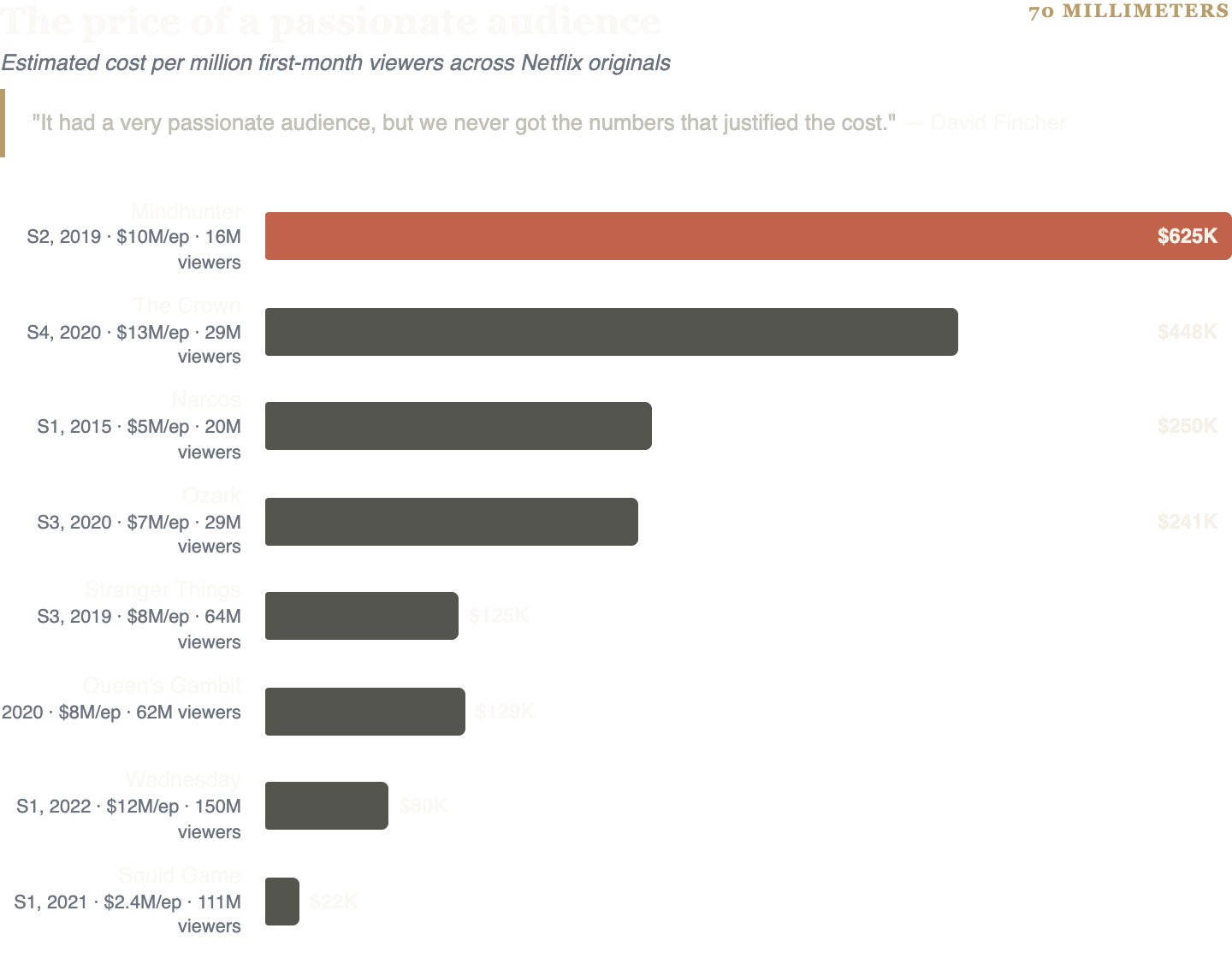
Budget: ~$10M per episode (lower estimate)
Seasons: 2 (2017, 2019)
Genres: True Crime, Drama, Docudrama, Police Procedural, Psychological Thriller, Mystery
There's a moment in the second season of Mindhunter where agent Holden Ford sits across from a kid in Atlanta, during the height of the child murders, and offers him ten dollars since the arcade will be open soon. The kid says he doesn't do that. He knows what ten dollars buys. Holden plays it off: a lot of Asteroids. Just stay inside. But as he starts to walk away, something clicks, and he turns back. What does ten dollars normally buy? Five for a picture. Like a Polaroid? Yeah. Did you know any of the missing kids? Some of them. Did any take money? A couple. Did they go to a brick house in Lakewood? No, the brown house by the stadium. Holden takes a breath and shows his badge. The kid runs. The scene moves on. And yet it sat in my chest for days, because the show trusts you to understand what that kid is actually talking about, and what it means that nobody in that world wanted to find out.
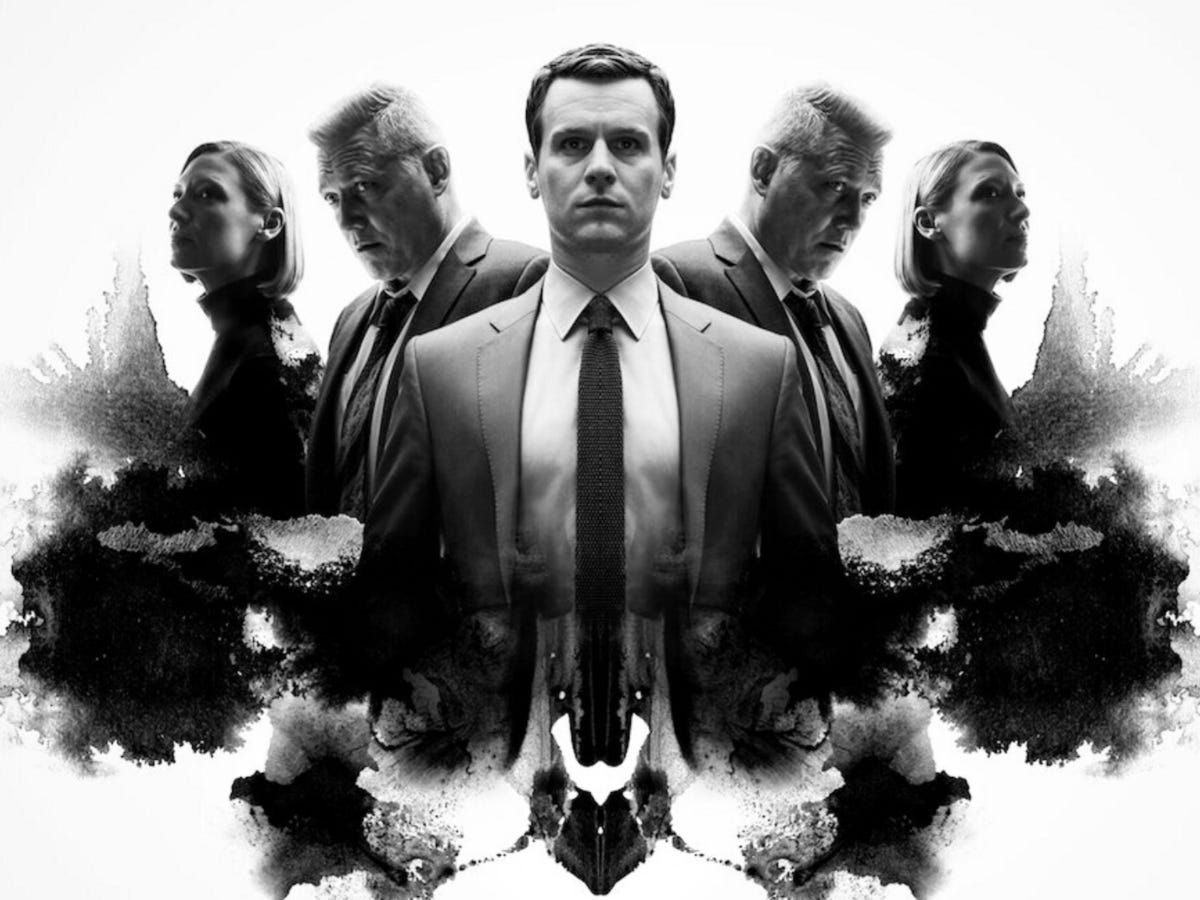
Mindhunter is the greatest true crime show ever. Arguably the greatest noir ever. Fincher makes the serial killer era of America feel like lived experience for people who weren’t alive for it. If you grew up hearing your parents or grandparents talk about Son of Sam, or the Atlanta murders, or Manson, this show puts you inside that world. Many younger people only know these cases as true crime trivia.
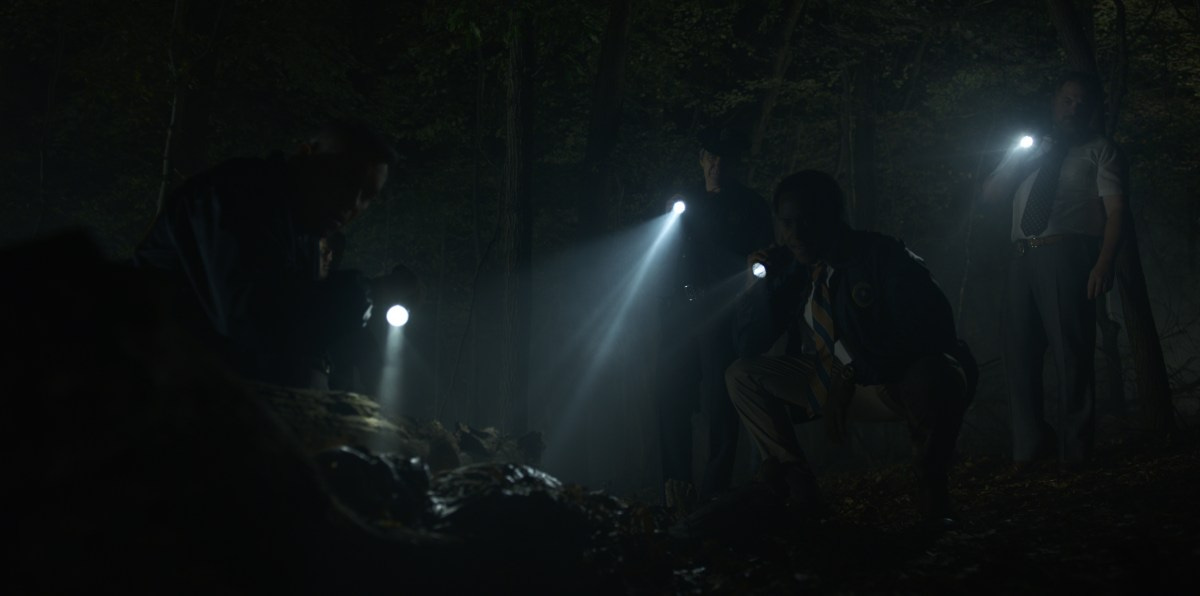
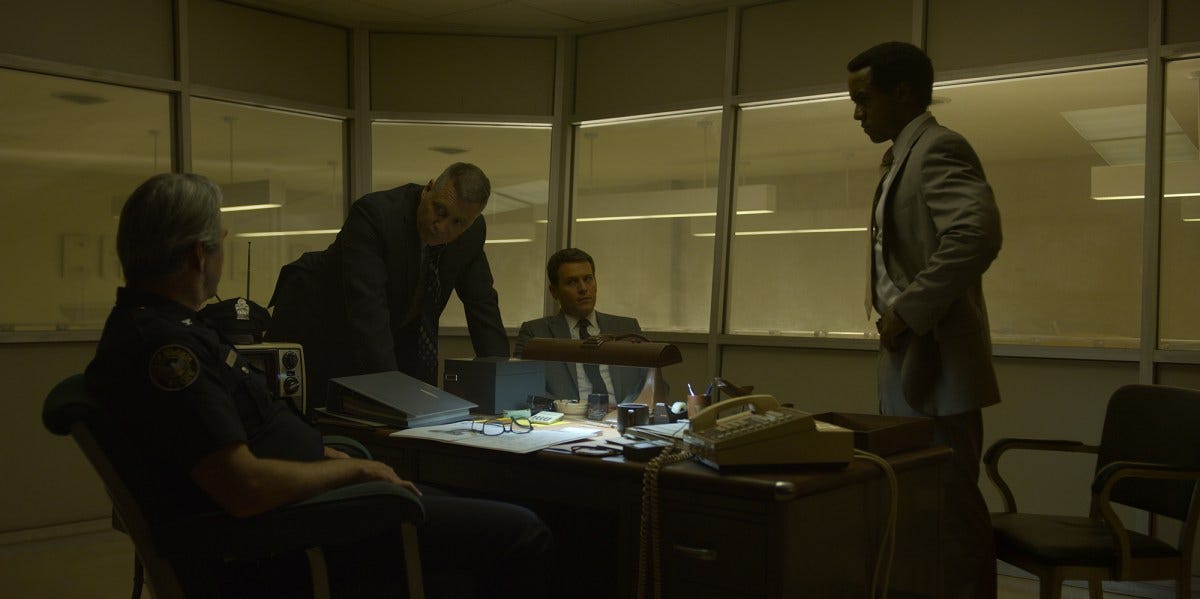
The show occasionally follows a case-of-the-week format before settling into its longer arcs. Even in those standalone episodes, nothing feels disposable. Each case becomes its own small noir tragedy. The Beverly Jean arc. The parade of killers in interview rooms, each one calmly explaining the logic behind evil. Mindhunter has everything the genre runs on: paranoia bleeding into the detectives' home lives, cigarette smoke hanging in fluorescent-lit offices, silhouettes behind glass, bureaucratic maneuvering that feels more dangerous than the criminals. But with its realism, it goes even beyond all that, and transcends the genre completely.
The curfews, the neighborhood watches, the way a city’s mood shifts when people stop letting their kids walk to school. My generation knows about terrorists and school shooters. We don’t know what it felt like when a killer operated for months or years in a single city, before cellphones and cameras were everywhere, when sketches went up on telephone poles and everyone looked at their neighbor differently. Mindhunter bridges that gap. I can see this being a show you watch with your parents or grandparents and suddenly understand why they tell certain stories the way they do, why certain names still make them go quiet. It takes a forgotten world, one before cameras and smartphones, and reconstructs it so precisely that the dread transfers across decades through the screen. That’s rare.
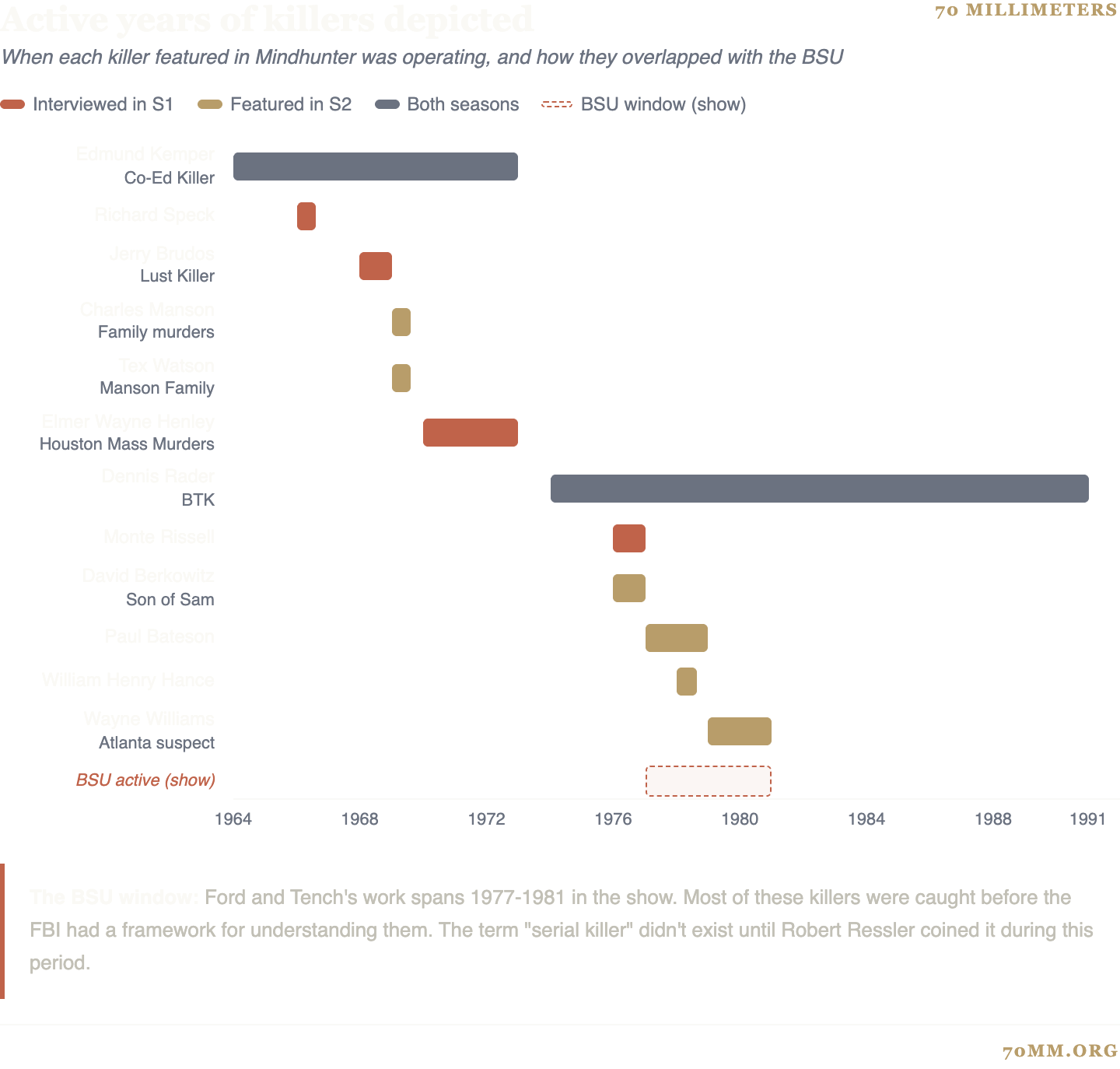
The FBI didn’t even use the term serial killer till these guys came onto the scene, even though they were living through the peak of serial killings in the United States. At first Holden comes across as frustratingly naive, the kind of guy who’d get outmaneuvered by a Denny’s waitress, let alone Ed Kemper. But the show finds its rhythm a few episodes in, and from that point through the final frame of season two, it is extremely binge-worthy and keeps you on the edge of your seat. For a show with almost no action sequences, no car chases, no gunfights, no fights, no real violence, that’s a remarkable thing to say. But here, the lack of action only adds to the murky, muddy atmosphere. Serial killers are strange humans, seemingly protected by even stranger forces.
Manson: “We’re all our own prisons. We are each our own wardens. We do our own time. Prison is in your mind.”
The lead cast Jonathan Groff, Holt McCallany, and Anna Torv were all unknown to me before this show. They shouldn’t have been. Groff makes Holden’s growing obsession with the truth feel addictive as he runs into shady or corrupt bureaucracy. McCallany gives Tench a weight that grounds the whole series. He’s the guy who’s seen enough to know the cost of looking too closely, and McCallany carries that knowledge in his shoulders, in the way he holds a beer, in the flatness of his voice when he tells his wife everything is fine.
FORD: So what are you teaching?
CARR: Um, I’m teaching a class on the intersection of sociopathy and fame. People like, um, Andy Warhol, Jim Morrison. Their celebrity becomes the only thing they need to sustain their ego.
TENCH: Nixon was a sociopath.
CARR: Very similar.
FORD: How do you get to be president of the United States if you’re a sociopath?
CARR: The question is, how do you get to be president of the United States if you’re not?
Torv’s Wendy Carr delivers one of the show’s sharpest lines almost offhandedly. It lands because Torv plays it like an observation. The show is full of moments like this, where something deeply uncomfortable about how society works gets stated plainly, almost casually, and you're left sitting with it.
Carr is a closeted lesbian working inside the late-'70s FBI, and Torv plays it well. She never telegraphs it. You see it in how she measures every room, how she calibrates exactly how much of herself to reveal and to whom. Her subplot with a woman in Annapolis adds a lot to her character, as does her general act of compartmentalizing, learning to live in two worlds.
Mindhunter keeps circling a quiet thesis: that the people who should be solving these cases are often the same people making sure they stay unsolved. Evidence gets buried. Witnesses get discouraged. Jurisdictions overlap in ways that seem designed to create blind spots. The Atlanta arc makes it explicit, with photographs withheld from case files and political pressure dictating investigative direction, but the pattern runs through the whole series. The FBI’s own bureaucracy treats Holden and Tench’s work as a nuisance before it becomes useful, and useful only insofar as it can be controlled. Wendy Carr’s research gets defunded the moment it threatens to produce conclusions that make the institution uncomfortable. The serial killers in the interview rooms keep saying versions of the same thing: nobody stopped me because nobody was really looking. And the show, without ever tipping into conspiracy, keeps showing you why. The connections between cases, the overlapping names, the institutional reflex to close a file rather than follow a thread somewhere inconvenient. Fincher lets it accumulate without editorializing (at least, to the degree the Overton window will allow). By the end of season two, the horror isn’t just that monsters exist, but the fact that our police system wasn’t designed to catch them. How many more killers have slipped through the cracks since the 80s?
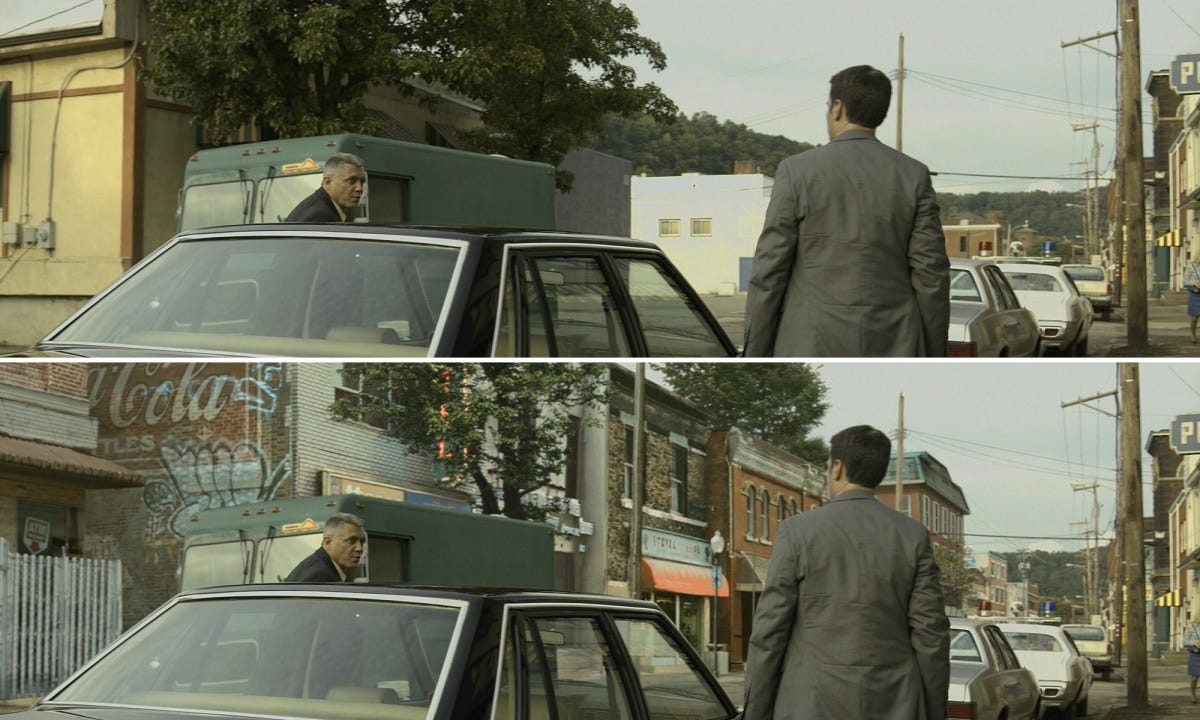
Fincher’s direction is a thing unto itself. The man is famous for shooting 50 to 75 takes of a single shot. He’s obsessive about matching camera height, velocity, and acceleration to the movement of a character. Not just speed: velocity and acceleration at any given point. The result is a show where every frame feels locked in, inevitable, like there was only ever one correct way to photograph each moment. The camera lives and breathes the character’s movements. The cinematography & composition, and lighting are literally perfect.
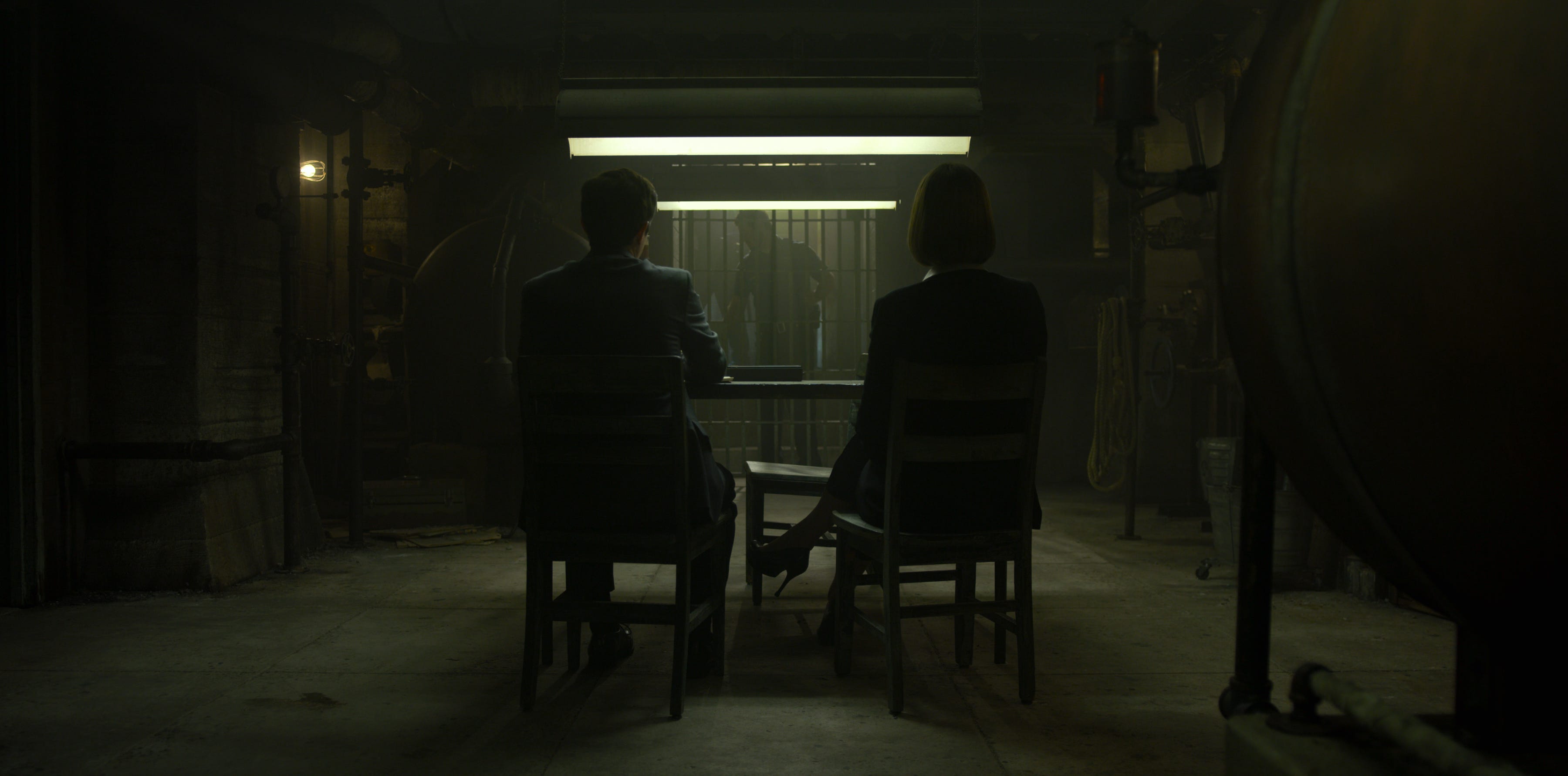
Much of that is Erik Messerschmidt, who shot both seasons and later won the Oscar for Best Cinematography on Fincher's Mank. His work here is unparalleled. The institutional fluorescents, the way interviews are lit so one side of a killer's face disappears into nothing.
Mindhunter cost millions per episode, much of it eaten by keeping actors on set for repeated takes, the rest used to make the thing look authentic to the time period, and that expense is why we never got a third season. But it’s hard to fault the perfectionism when the output is this flawless. The acting is incredible. Every shot earns its place. This is an all time great.
KEMPER: “Seems to me everything you know about serial killers has been gleaned from the ones who’ve been caught.”
The color grading and overall costume design are worth studying. The show looks like the ‘80s without looking like a costume party. The palette is muted, institutional, full of wood paneling and fluorescent light and the particular beige of government buildings. It’s hard to believe you’re watching something made in 2017. It feels like you’re actually being transported back in time. The buildings specifically are so realistic. It makes you want to go hang out with the agents and investigate things yourself, during one of the most fascinating periods to be a detective.
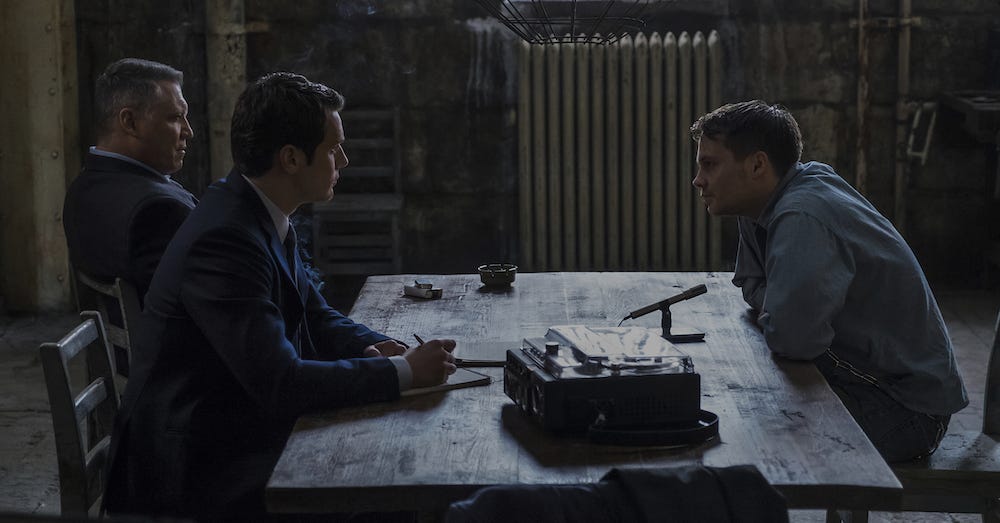
The villains are where Mindhunter becomes something else entirely. Every conversation with a serial killer plays like a short film within the episode. The suspense is often heightened with smoke and sexy shadowy-noir lighting.
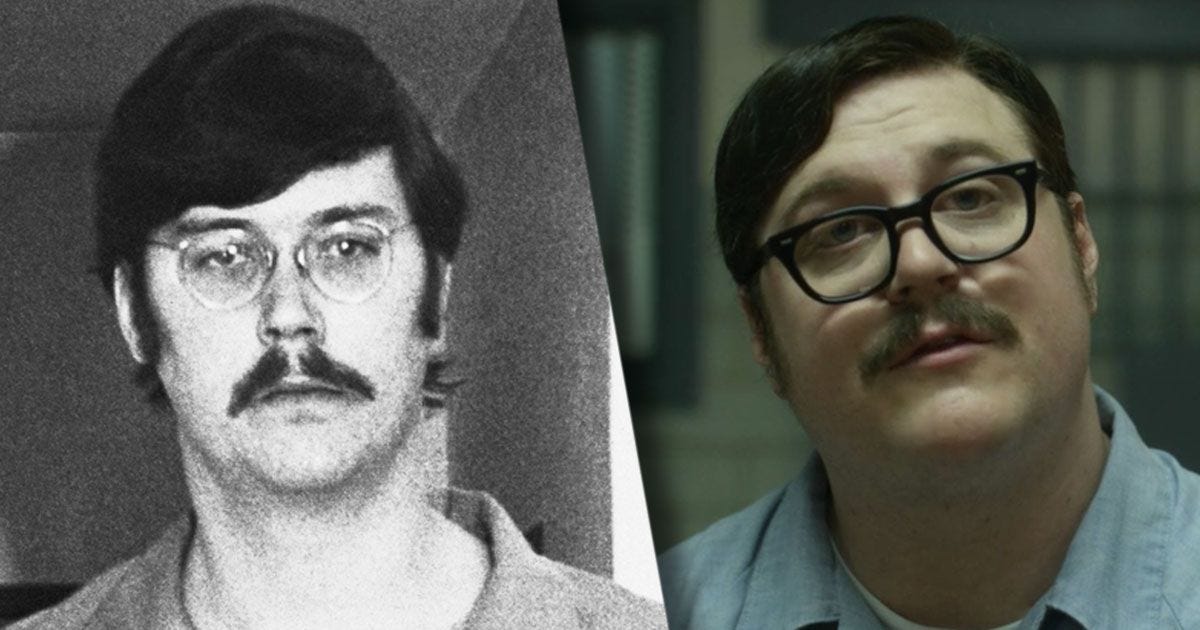
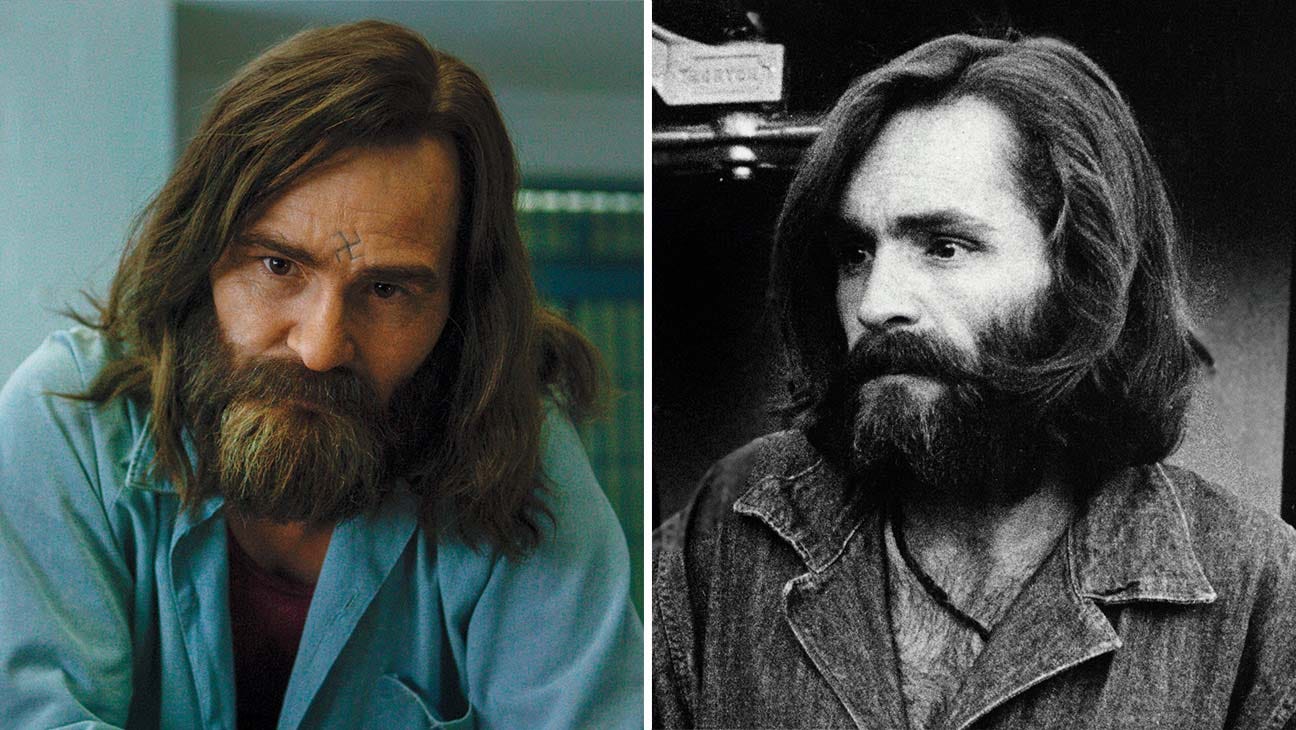
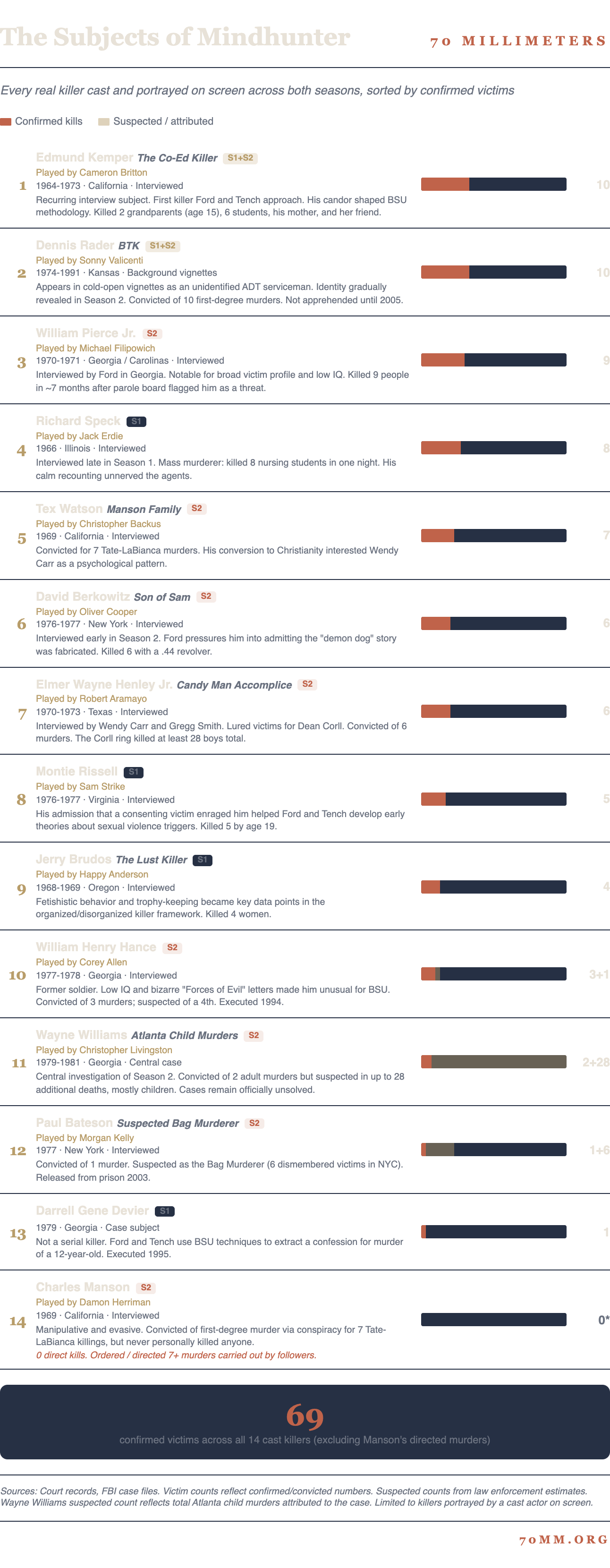
Cameron Britton’s Ed Kemper is one of the great performances in television. Period. He’s enormous, articulate, weirdly warm, and absolutely terrifying because you find yourself almost liking him. The casting of Berkowitz, Manson, every single one of the serial killers, was surgically precise. Britton earned an Emmy nomination for Outstanding Guest Actor for the role, one of the show's only major awards recognitions despite its quality.
Ed Kemper: “Butchering people is hard work. Physically and mentally. I don’t think people realize. You need to vent.”
The dialogue was drawn from real transcripts. These people felt so real, almost documentary-like, and the actors played them without a shred of caricature. The meeting with Manson felt like one of the great moments in criminal history. The interview with Tex Winter, Manson’s accomplice, is superbly eery. The man tries convincing the agents that Manson didn’t make them kill anyone, but that he just removed their fear of committing murder (with LSD and other means).
The score is one of the best things about the show. The soundtrack starts quiet and functional in the early episodes, then takes off around mid-season one and never comes back down. “Silk Drape” became one of the anthems of the show. It plays behind scenes of Tench going home, trying to be a normal father and husband after spending his days inside the heads of people who tortured and killed. The piece is dark, patient, and deeply sad. It turned those domestic scenes into something that felt like peak film noir, the shots always perfect, the lighting always catching Tench in half-shadow. “I Know You’re Not Just Here To Teach” reflects the strange ambience of that serial killer era perfectly.
The show is full of moments like this, where something deeply uncomfortable about how society works gets stated plainly, almost casually, and you're left sitting with it.
But there’s another piece, used during both the Beverly Jean episode and at points in Season 1, then again in Season 2 in Atlanta during the aforementioned scene when the kid names his price, called “Rose Confession” that steals the show for me. It resurfaces throughout the second season at pivotal moments. It’s the best composition in the show. When it plays during the Atlanta investigation, it’s devastating.
Mindhunter's use of silence is equally remarkable. I noticed it most in season two. When the agents arrive at a new prison or police station, the background noise runs hot: other prisoners talking, doors clanging, fluorescent buzz, the ambient life of the building. Wide-angle shots pull you into the space. The sensory information grounds you into the location. Then, as the scene narrows to the interview itself, all of that falls away. The camera tightens. The wide shots give way to close-ups, faces filling the frame. The ambient sound drops to nothing. No hum, no air conditioning, no room tone. Just two people talking. The camera work and the sound design are doing the same thing in tandem: giving you the wide, loud impression of a setting, then stripping it all back until you're locked in on the personal tension between interviewer and subject. It's a Fincher signature, but it's never been more effective than here. The absence of sound makes the dialogue feel like it's happening inside your own head, like you're the one sitting across the table. When the score does return after one of those interviews, the contrast hits physically.
Season 1 of Mindhunter was elite TV. But Season 2 pivots toward the Atlanta Child Murders, and this is where Mindhunter enters Greatest-Of-All-Time territory. The investigation sprawls across multiple episodes of the back half of the season with a singular focus. From 1979 to 1981, dozens of young people, mostly black children, were abducted and murdered in Atlanta. The show recreates the fear of that period: the curfews, the parents escorting teenagers to the movies, the kids talking among themselves about who might be next. We get to see how a city tears itself apart when its children start disappearing and nobody in power seems to care enough. The serial-killer era of America, on full display.
Mindhunter reveals how many of the children adjacent to the victims - and their parents - were never even interrogated by local police until the FBI got to the scene, even though many of the missing children knew each-other. People knew about what was going on, but nobody bothered connecting the dots. Something deeply sinister was going down in Atlanta.
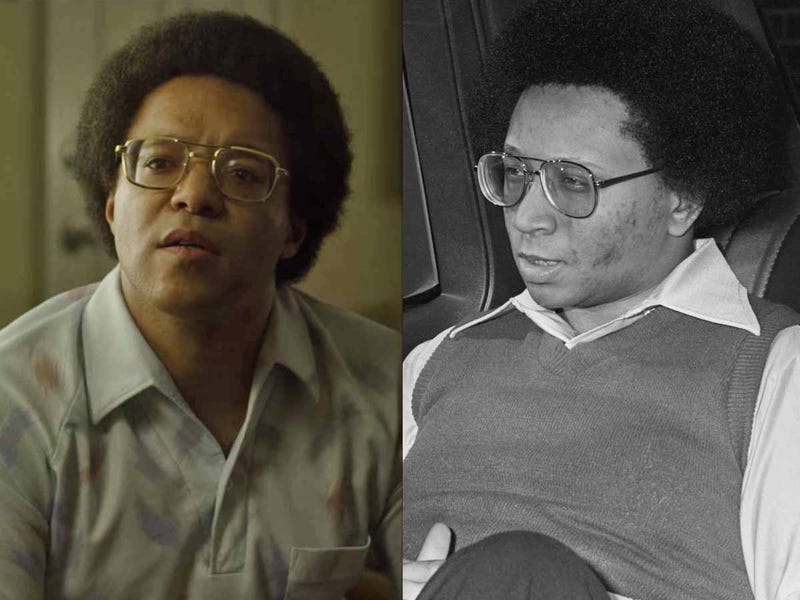
Eventually, they find a suspect: Wayne Williams. And the capture of Wayne Williams is iconic television. The investigation is exhausting, and builds to an incredible climax. The end of season 2, episode 8 is one of the most anticipated moments I’ve ever come across. Atlanta police had been patrolling the Georgia rivers for five consecutive weeks, burning through their budget with nothing to show for it. This was the last night, and of course some details were dramatized. But the casting of Williams is perfect. This is a deranged man, and the actor is phenomenal playing him: denying everything, sending cops on wild goose chases. The scene where he brings an entourage to the mayor's house demanding justice is legendary, and it's real. Wayne Williams was actually this unhinged. The chase through Atlanta in the finale is something to behold too, full of stunningly accurate aerial shots of the city in the early '80s.
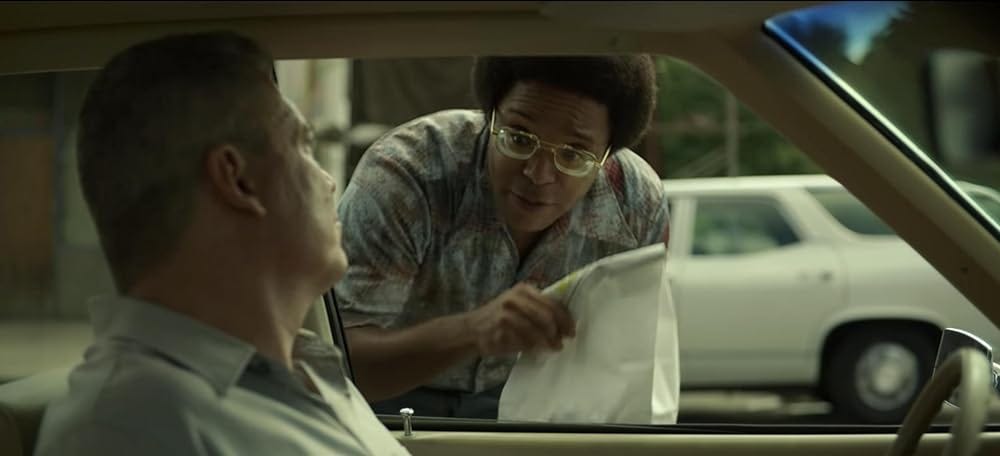
But the show’s bravest choice is what comes after. Holden discovers that someone inside the Atlanta Police Department withheld photographs of black children from the suspect’s case file and only left white children in there, deliberately sabotaging his profile of the killer. The show puts it on screen plainly: the case was never really solved. Wayne Williams was likely a patsy. It lets that fact sit there, unresolved.
ALBERT JONES (Atlanta FBI Agent): Remember your kid in the mall, the house next to Fulton County Stadium he talked about? I asked a recruit to go through three years of pedophile complaints and convictions, look for any red flags. Found this guy. Sixty-three-years-old, black. We got complaints of young boys being given drugs and spending the night. There's no connection between him and the house in Lakewood. The old white guy (another suspect).
This recruit was on the detail that boxed up the Polaroids from Lakewood. He swears there were pictures of black children among them. Evidence log said the photos were exclusively young white males. He also said they hauled out thousands of Polaroids. This puts the number between 300 and 400. He says APD locked up the photos. But when they got logged into evidence, there were no pictures of black children.
TENCH: Would your recruit go on record with the district attorney?
ALBERT JONES: He doesn't want his name to be used. He's just giving us something to run down. We’ve been working with this task force for months. Somebody from APD knew we should have been looking at these guys all along.
I couldn’t stop thinking about it. So I started reading.
What I found was even worse than what the show depicts. Many of the missing children knew each other. Several were seen on the streets after their reported disappearances. Some made phone calls after they went missing. There were many more victims past the 28 that police kept tabs on. Indeed, as seen in the show, the police didn’t do proper diligence before the FBI got there.
Somebody within the police force was likely involved in covering things up. A child pornography ring was operating in the area, and many victims had connections to it or to people involved in it. The older children in the ring would recruit younger ones. The show certainly alludes to all this quite well. The investigative journalist who went by the pen name Cisco Streetlove, who apparently grew up near the victims, confirmed much of this on the Opperman Report podcast before his death. He named suspects, described two separate rings, and connected the case to broader trafficking networks. His work tracks with the show’s implications but goes much further than Fincher could on a Netflix series.
Williams himself had a documented connection to a CIA training program. In a 2011 CNN interview, Soledad O’Brien asked him about a document called “Finding Myself” that discussed his past as a CIA trainee. He was evasive. The fiber evidence connected him to fifteen victims, but the full picture includes a paramilitary training camp near Atlanta run by Mitch WerBell, where Williams and others trained. The order to arrest Williams reportedly came from the vice president.
Fincher knew. He stuck to the source material on Atlanta with a stubbornness he didn’t apply anywhere else in the show or in any of his work, and in doing so he revealed things most entertainment is too cowardly to touch.
We’re downgrading Atlanta to pending inactive status. The director wants to show
his appreciation.
Wait, inactive?
We’ll keep a few agents here for trial support and cataloging evidence.
What about the kids?
It’s up to the DA which cases get tied to Williams. The important thing is, from now on, we’ll be first in. Atlanta’s changed everything. We did our jobs. We have no control over anything else.
This show had me digging for weeks after I finished it. Not just on Atlanta. On every serial killer case the show touches, and then on cases it doesn't. The 20th century is full of them, and the deeper you look, the stranger the patterns get.
![My favorite shot of Season 1 [S01E04] : r/MindHunter](https://substackcdn.com/image/fetch/$s_!_7k7!,f_auto,q_auto:good,fl_progressive:steep/https%3A%2F%2Fsubstack-post-media.s3.amazonaws.com%2Fpublic%2Fimages%2F1adfa167-8609-49e9-a480-f613b3c68a4d_1280x582.jpeg "My favorite shot of Season 1 [S01E04] : r/MindHunter")
The BTK killer teasers threaded through both seasons are tantalizing and ultimately cruel. The show sets up Dennis Rader’s arc with cold opens that never pay off because the third season never came. Fincher shoots his scenes almost entirely without dialogue. Dennis Rader goes to work, binds packages, adjusts his glasses, drives home. It’s one of the great unfinished stories in television. Season three was reportedly going to show how the Behavioral Science Unit influenced the creation of shows like Criminal Minds and films like Silence of the Lambs, and the extended cat-and-mouse with BTK would have been its centerpiece. That we’ll likely never see it is a huge loss.
![The Closing Scene of [Mindhunter] (Season 2) – did you blank it?](https://substackcdn.com/image/fetch/$s_!NaW6!,f_auto,q_auto:good,fl_progressive:steep/https%3A%2F%2Fsubstack-post-media.s3.amazonaws.com%2Fpublic%2Fimages%2Fbaa1c17e-8af4-4946-af29-fd94fa881dc8_1280x720.jpeg "The Closing Scene of [Mindhunter] (Season 2) – did you blank it?")
Mindhunter reminded me most of True Detective's first season, the only other show that matched this level of craft and atmosphere in the true crime space. But this eclipsed its level of realism. True Detective leaned into rebellious heroism and Rust Cohle's philosophical monologues. It built its horror around archetypes and metaphor. The Yellow King, Carcosa, was a real person and all of it pointed at something real (Reverend Tuttle obviously based on real people) but through a mythic lens. Mindhunter is 100% grounded. These are real people, real cases, and the show forensically breaks down how evil actually operates. There’s a lot more here for someone genuinely interested in serial killers. It’s a lot more like a dramatized documentary.
That makes sense when you consider the source. John E. Douglas, the real agent behind Holden Ford, consulted on The Silence of the Lambs. Bill Tench is drawn from Robert Ressler, who worked alongside Douglas and coined the term "serial killer." This show is the origin story of the men whose careers built the genre that made the show possible. The serial killer dialogue was pulled from real recorded interviews, and the show's depiction of those conversations is widely regarded as the most accurate dramatization of the BSU's early work.
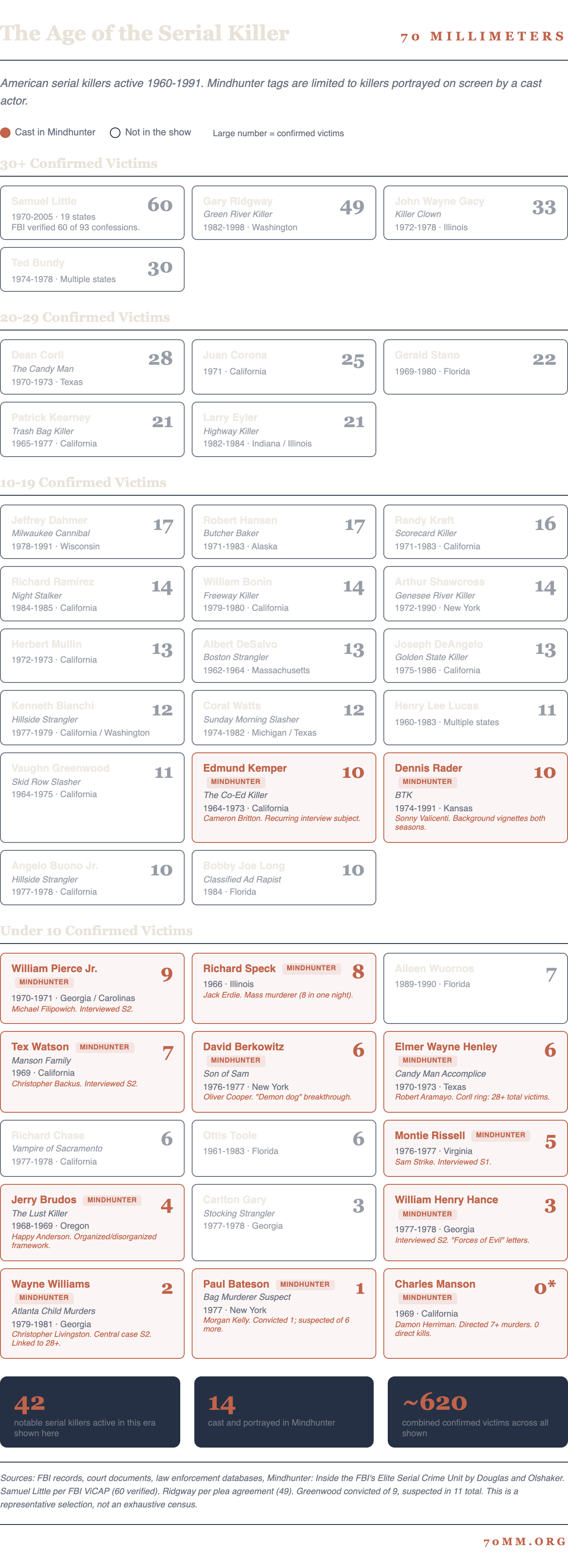
The sheer volume of all-time crazy serial killers & accomplices Mindhunter brings on screen is noteworthy: Edmund Kemper, Jerry Brudos, Richard Speck, Monte Rissell, Dennis Rader, Charles Manson, David Berkowitz, Wayne Williams, William "Junior" Pierce, Elmer Wayne Henley Jr, Paul Bateson, William Henry Hance, Tex Winter.
CARR: I’m glad this worked out. When you sent me your notes from the Kemper meetings, I was in a real rut with my new book.
FORD: What’s your book about?
CARR: It’s about white-collar criminals, men not so different to your Edmund Kemper.
FORD: How do you think the men you study are similar to Edmund Kemper?
CARR: Well, first of all, they’re all psychopaths. I study captains of industry: IBM, MGM, Ford, Exxon, you name it. And sure, these men all have wives, kids, dogs, goldfish, but not because they stopped being psychopaths, but because they just had different leanings.
FORD: But you think they have the same underlying personality traits?
CARR: Well, Kemper shows a total lack of remorse, a lack of inner emotional structure, no ability to reflect on the experience of others. [...] Although your project is obviously in the nascent stages, it already feels like a clear successor to The Mask of Sanity, which, as you know, is quite a compliment.
(For those unfamiliar, The Mask of Sanity is a 1941 book by psychiatrist Hervey Cleckley that's considered foundational to how we understand psychopathy. His core idea is that psychopaths wear an outward mask, mimicking normal human behavior well enough to move through society undetected.)
Both True Detective & Mindhunter do something rare for prestige television: they take unglamorous, costly, necessary work seriously. Every detective pays a price. Relationships strain. Sleep disappears. The ability to be present in any room not connected to the worst things humans do fades. That's what makes them so good. There's a real shortage of dramatic work that treats true crime with this kind of gravity. Done right, a show like this can make a young person want to be the one who looks at a hard problem and doesn't walk away. We need more of both, because the world keeps producing the kinds of problems that need people willing to stare at them.
Season two of Mindhunter belongs in the conversation for best single season of television ever produced. And across both seasons, this is Fincher’s definitive work. It’s more nuanced and rewarding than Zodiac, more emotionally complex than Se7en, and perhaps the most visually impressive work in his catalogue. The darkness of the agents’ work spills into their homes. Tench watches his adopted son exhibit behaviors that mirror the killers he studies. Holden’s relationship disintegrates under the weight of what he can’t stop thinking about. The show understands that this work changes what you bring home.
Netflix needs to bring this show back. Mindhunter is the most chilling, carefully constructed, honest piece of true crime television ever made. It respects the dead by refusing to look away from how they were failed. It respects the audience by refusing to explain what it’s showing you. There's nothing else like it. A show with this level of craft and budget that treats real history like an unfolding investigation rather than a retrospective. Most period pieces tell you what happened. Mindhunter makes you realize nobody knows yet.
https://shapeofcinema.substack.com/p/mindhunter-2017?r=8dbojf&utm_medium=ios