


9/10 (Spoiler Free)
Project Hail Mary is a $200 million space film with the soul of a family bedtime story, the kind of movie where a grown man befriends something he can’t understand and the whole theater falls in love with both of them. Ryan Gosling wakes up alone on a spaceship, figures out why he’s there, and makes you care about every single step of the process. It’s funny, warm, gorgeous to look at, and built for the biggest screen you can find.
There’s a moment somewhere in the second act of Project Hail Mary where I realized I was watching one of the best family movies ever made. This will be watched on family and Christmas movie nights fifteen years from now.
That’s the thing about Project Hail Mary. It plays completely differently depending on who's on the couch with you. Take your kid and their friend and it lands like an event, the kind of movie where a nine-year-old internalizes values about courage and loneliness and dying in space. Watch it with your wife on a weeknight and you might catch her drifting during the second exposition dump, the one where Gosling talks through the science out loud because he has to, because the movie needs everyone to keep up. Rocky the alien is charming in a way that's kid-tuned. So is the voiceover.
You warm to Gosling fast. I mean really fast. He’s playing a regular guy, a science teacher who’s smart and a little awkward and deeply human, and within ten minutes you’re rooting for him the way you root for a friend. I’ve loved Gosling in different roles. He was magnetic in The Big Short, haunted in Blade Runner 2049, and carried Drive. He’s funny & sincere without being corny, and does a great job physically maneuvering the sets. He carries two and a half hours almost entirely by himself (and one companion). That’s remarkable for any actor in any genre.
Drew Goddard’s screenplay is genuinely funny. Not quippy, not Marvel-punchline funny where every emotional beat gets ruined by a one-liner, but funny in the way a smart person is funny when they’re scared and trying to figure things out. The comedy keeps things light without undercutting the stakes. There were several moments where the joke lands so well the whole theater laughed out loud, and a handful of quieter ones that just made me grin. Phil Lord and Christopher Miller know comic timing better than almost anyone working right now.
Lord and Miller haven’t directed a live-action film since 22 Jump Street in 2014. Twelve years between directorial efforts. In the interim they produced the Spider-Verse films, which won Oscars and redefined what animated movies could look like. They got fired from the Han Solo film at Lucasfilm, which, in retrospect, looks more like a badge of honor than a blemish. And then they came back with this. A $200 million original science fiction film that isn’t a sequel, isn’t part of a franchise, and isn’t based on existing IP beyond a novel most general audiences haven’t read. Amazon MGM handed them a quarter of a billion dollars to make a movie about a guy talking to a rock in space. That took guts from everyone involved, and you can feel that commitment in every frame.
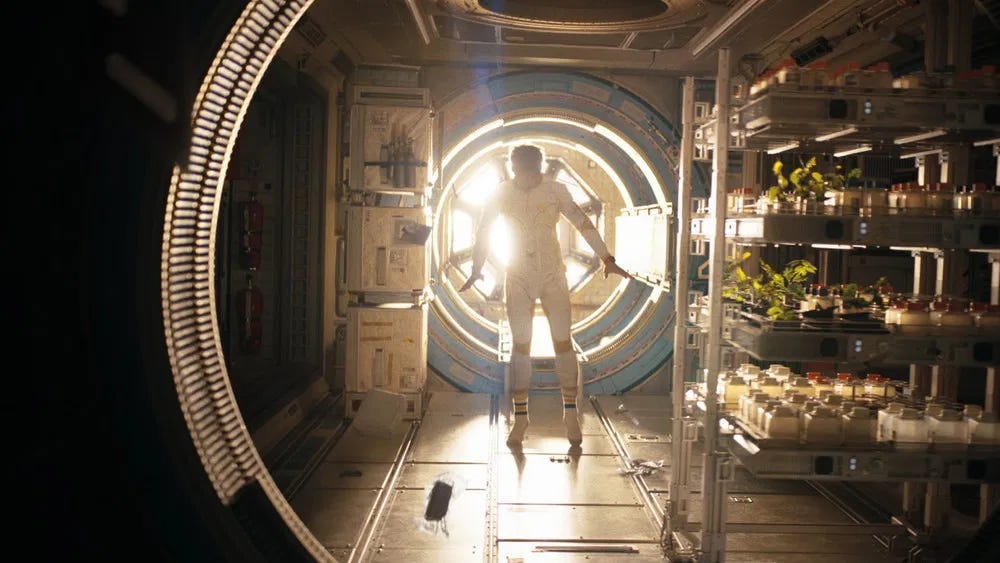
There is no green screen in this movie. Not a single green or blue screen was used during production. The entire interior of the Hail Mary spacecraft was built as a physical set at Shepperton Studios. The ship rotates to simulate gravity. When Gosling moves through the corridors, pushes off walls, and interacts with equipment, he’s doing it on a real set that Greig Fraser’s team lit with practical lights. The exterior of the ship was partially built as well. Of course, there are thousands of VFX shots in the film, and the space sequences are handled masterfully by Framestore and ILM. But the foundation is real. And you can feel it. I’m a stan of Tom Cruise, Christopher Nolan, Denis Villeneuve, and any filmmaker who takes this approach. Thank you Lord and Miller.
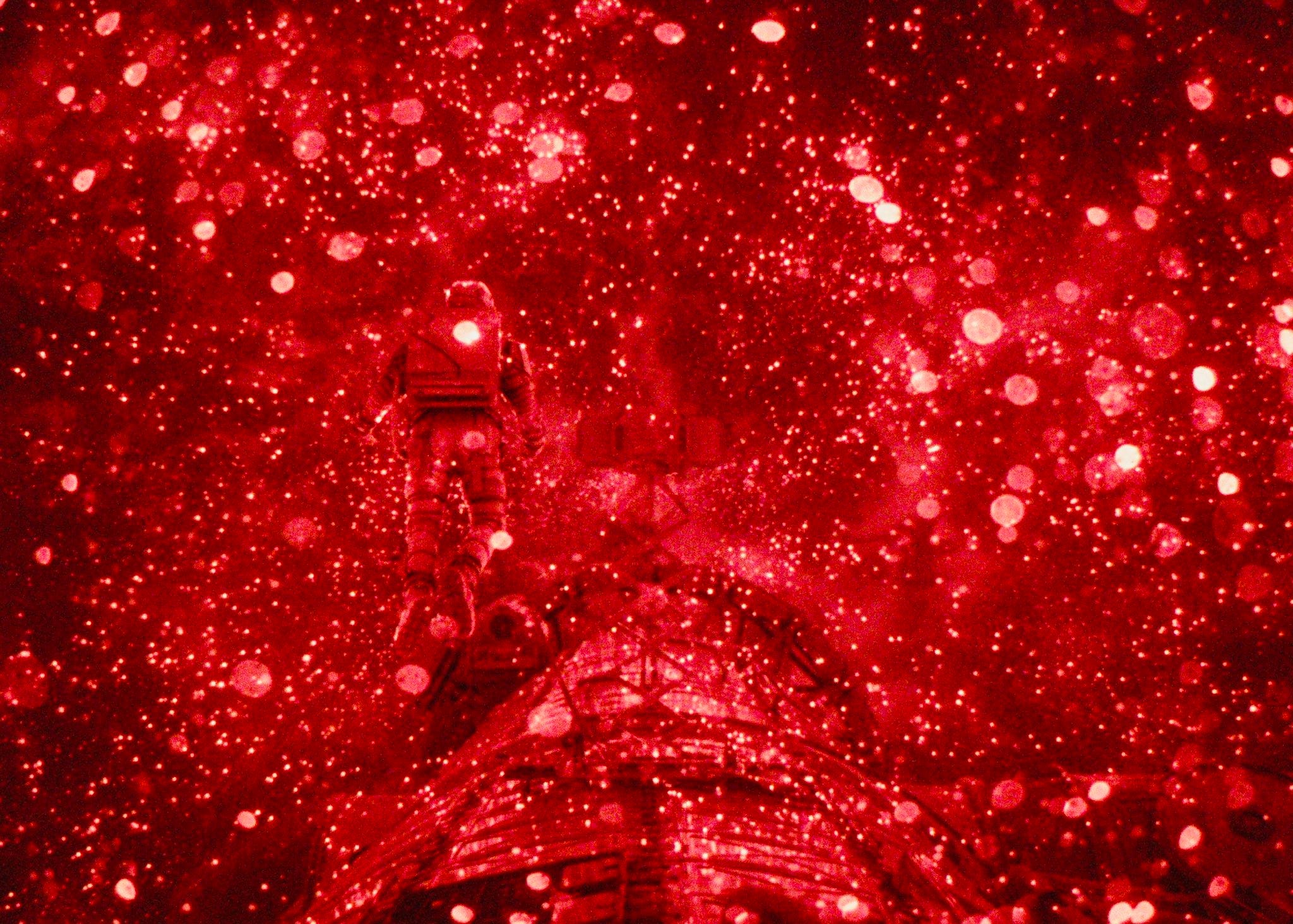
Rocky, the alien companion at the heart of the story, is a practical puppet. Much like CASE and TARS from Interstellar. Built by Neal Scanlan’s creature shop. Performed on set by James Ortiz and a team of five puppeteers they called “The Rockyteers.” Gosling acted against a real, physical puppet in every scene they share. The CG artists at Framestore took it from there, enhancing and extending what was captured on set, but the baseline performance is a puppet operated by human hands. Rocky is fun. Rocky is cute. Rocky does the job the movie needs, which is to make you care about something that looks and sounds nothing like a person. Guillermo del Toro saw the film and publicly praised the puppetry and practical work as inspiring. He’s right. This is how you do it.
They also did something technically unusual with the image itself. The film was shot digitally, then transferred to actual film stock, and then re-digitized. The purpose was to give the digital footage the warmth and texture of analog film, the slight grain and softness that your eye registers as “real” even when you can’t name why. It worked. When I was watching, I thought it was shot with film. Admittedly pure IMAX with real film looks slightly better, but the grainy look hits hard for sure and I was thinking about the ‘depth’ and sophisticated feeling of the shots thanks to the grainy look.
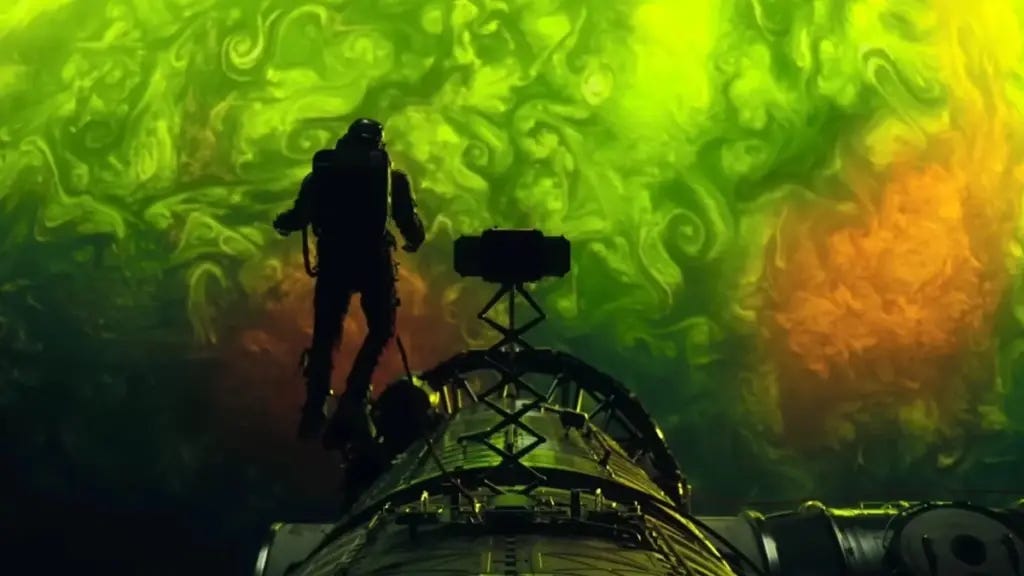
Greig Fraser shot this movie. The man is on a historic run. Dune. Dune: Part Two. The Batman. He even made Rogue One look good despite Disney's oversight. And now this. Every single frame of Project Hail Mary looks like a painting. I don’t say that to sound smart. There are sequences in this film where I stopped following the plot for a few seconds because the composition and the light were so striking I just wanted to look at them. Fraser has this habit of letting everything around his subject fall into these gorgeous pools of blur while the person in the center stays pin-sharp. Hence the term painting:
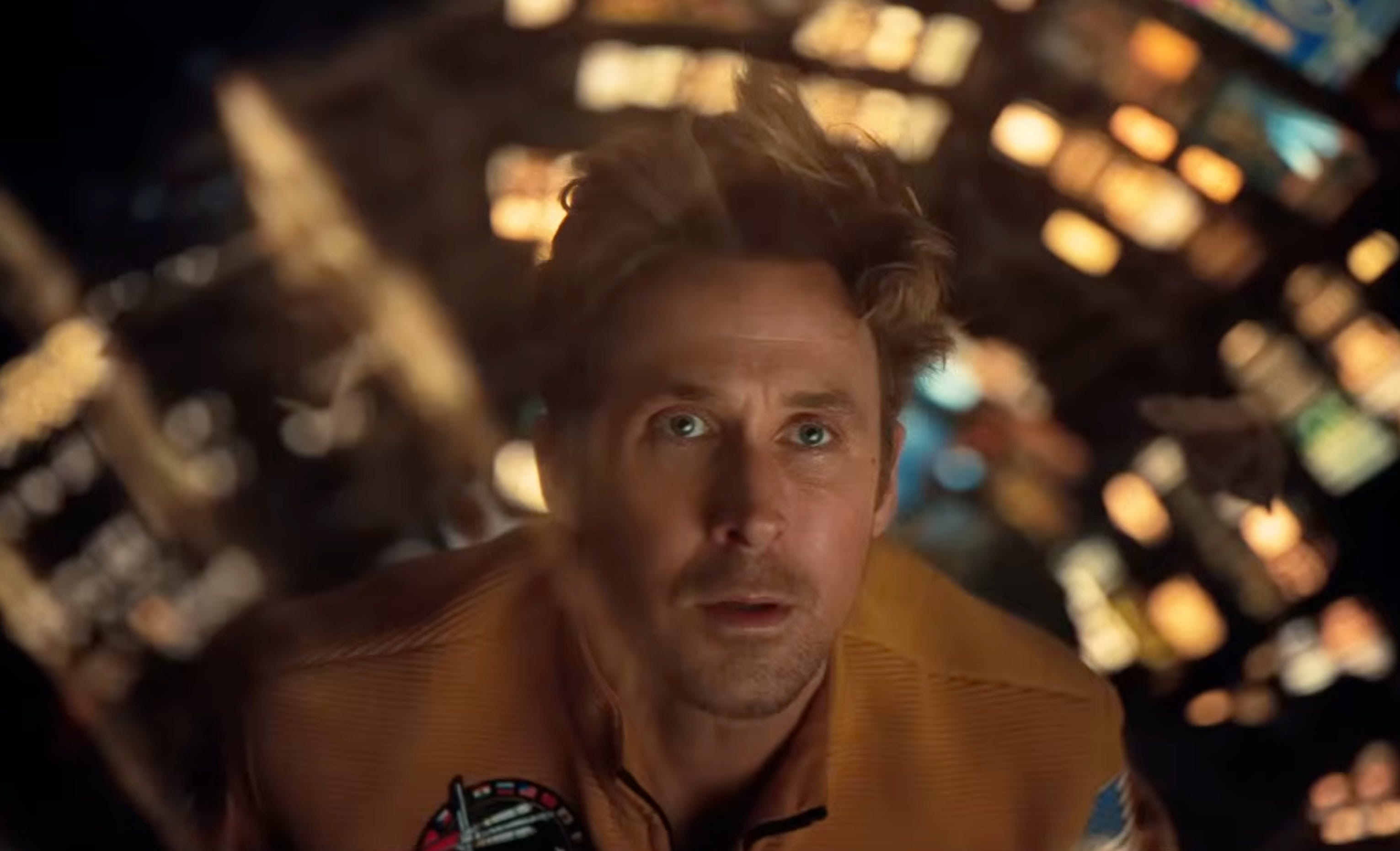
The colors feel warm and grounded on the ship, cold and vast in space, and there’s a flying sequence in the back half that is genuinely breathtaking. Edge-of-your-seat, stomach-lifting, hold-your-breath stuff. Fraser knows how to make scale feel real. He knows how to light a face inside a helmet so the actor’s eyes do the work. He knows when to let a wide shot sit and when to push in close. For my money, he’s on track to be on the Mount Rushmore of cinematography.
The karaoke scene is fire. I won’t spoil the context, but Sandra Hüller sings, and it’s one of those moments that doesn’t advance the plot at all and is absolutely essential to the movie. It makes the film richer. The backstory to the song is awesome too. Gosling heard her singing it on set, and they decided to work it in.
Daniel Pemberton reunited with Lord and Miller after the Spider-Verse films (where he did a great job), and what he delivered is a 38-track, two-hour piece of work built on an idea the directors called “Hope Core.” His approach was to keep everything organic and tactile. He traveled to Paris to record a Cristal Baschet, a 1940s French glass organ played with wet fingertips. He recorded children from Wells Cathedral school clapping and stomping to build percussive textures. He sampled a squeaky water tap and transformed it into an unstable, fragile-sounding instrument that recurs throughout the film. Steel drums, human vocals, choral layers. The result feels handmade and warm in a way that space movie scores rarely do. Gosling actually had Pemberton’s early compositions in his personal playlist while shooting, listening to them to stay in character. It all has a gentleness that matches the movie’s soul.
There are lot of parallels with Interstellar thematically and from a filmmaking craft perspective. In the way they have a hint of religious motifs in the soundtrack and plot. In the way they are about humanity’s place in the stars. In the way they built their practical space sets and made practical puppets for characters instead of using CGI. In some ways, Project Hail Mary is a family version of Interstellar.
I’ll be honest: I still like Interstellar more. A lot more. It’s more mature and a superior movie. The Zimmer score on that film is in a different class, arguably the best soundtrack of all time. Interstellar is also darker, more emotionally punishing, and more visually ambitious in several sequences thanks to the story. Nolan’s IMAX footage of the black hole and the water planet and the docking sequence, those are all-time images. Project Hail Mary doesn’t try to compete with that, of course. The comparison is natural since they’re both space movies about people trying to save Earth, but the tone is completely different. Interstellar is a father’s desperation to save his children. Project Hail Mary is a buddy adventure with a big heart. It’s more of a warm space buddy adventure movie than Interstellar’s space tragedy-epic. Pemberton’s score is good. It serves the film. It’s the right score for this movie. It’s not the kind of score that haunts you the way Zimmer’s organ does. That’s okay. Different movies, different ambitions. Ultimately, both movies push the boundaries of space filmmaking, look gorgeous, achieve their own goals, and deserve to be seen in theaters.
I will say, Hail Mary choosing to keep the science lighter was essential to its flow. The more family-friendly nature is essential for it’s box office performance. I respect that trade-off a lot. Ultimately, I’m just happy we got it in an age of schlop. I want a space movie with this flavor to exist, just like I want a space movie with Interstellar’s flavor. They are both healthy for the soul.
The one thing I’ll dock? I felt there’s a minor plot hole near the end that doesn’t quite hold up if you think about it for more than a minute. But the movie earns so much goodwill by that point that you shrug and move on.
On opening night Gosling showed up unannounced at a New York theater, stood in front of a packed house, and told them: “It’s not your job to keep theaters open. It’s our job to make things that make it worth you coming out.” That’s exactly right. The film industry has spent years blaming audiences for not showing up, blaming streaming, blaming phones, blaming everything except the quality of what’s being offered. Gosling is one of my favorites. Blade Runner 2049, Drive, The Big Short, La La Land, Barbie. He picks projects that are worth making. And now he spent six years producing and starring in an original sci-fi film because he read the manucript before the book it’s based on even came out and thought it was too good not to try.
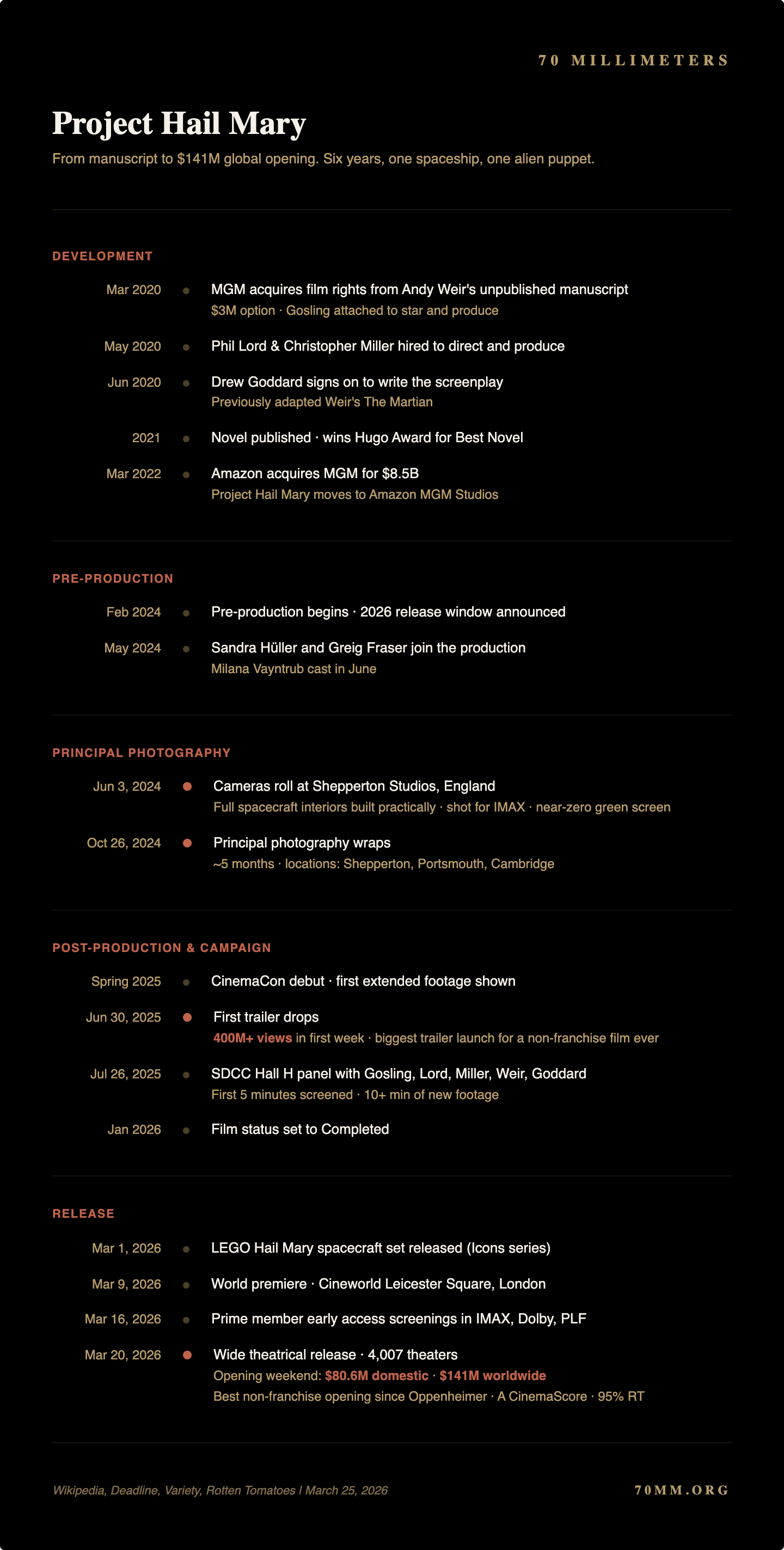
I want to give Amazon MGM credit here, what they did took real conviction. This is their first legitimate theatrical hit since acquiring MGM for $8.5 billion, and they backed it to the tune of $200 million on an original property with no franchise safety net. That matters. Amazon and Apple are doing something genuinely useful for movies and television right now. They're tech companies with deep pockets and a different profit calculus than traditional studios, which means they can finance ambitious, expensive films that don't need to be guaranteed home runs to justify their existence. Apple bankrolled F1, which other studios balked at. Amazon bankrolled this. Jeff Bezos has Blue Origin sending rockets into space and Amazon MGM sending Ryan Gosling there, and both bets are paying off. When more studios are in the mix and more money flows toward actual filmmaking instead of IP management, the whole ecosystem gets better. Greenlight more movies like this and Villeneuve’s Bond, and less garbage like Stephen Colbert’s Lord of the Rings nonsense please Amazon.
A $200 million family movie that respects its audience, doesn’t pander, and isn’t the fourteenth installment of anything. No cinematic universe. No post-credits teaser for the next one. A complete, well-made film that stands on its own. Right now it feels radical.
This is a film designed for a kid to watch with their parents, and for both of them to walk out happy. And this stuff is a way better influence for them than Disney or Marvel’s drivel, that’s for sure. It doesn’t talk down to anyone. It assumes you’re smart enough to follow the science and patient enough to let the story unfold. It’s wholesome without being cheesy. It’s positive without being naive. It believes that people are good, that problems are solvable, and that the universe is worth exploring, and it makes you believe all of that too.
See it on the biggest screen you can find. Bring your kids. Maybe even bring the person who says they don’t like space movies, they might discover they were wrong.