


10/10 (Spoiler Free)
Rabbit Hole is a paranoid conspiracy thriller built for anyone who has ever looked at modern politics, data harvesting, digital manipulation, billionaires, intelligence agencies, fake narratives, public rage, and blackmail, then thought: yeah, this is probably worse than we know.
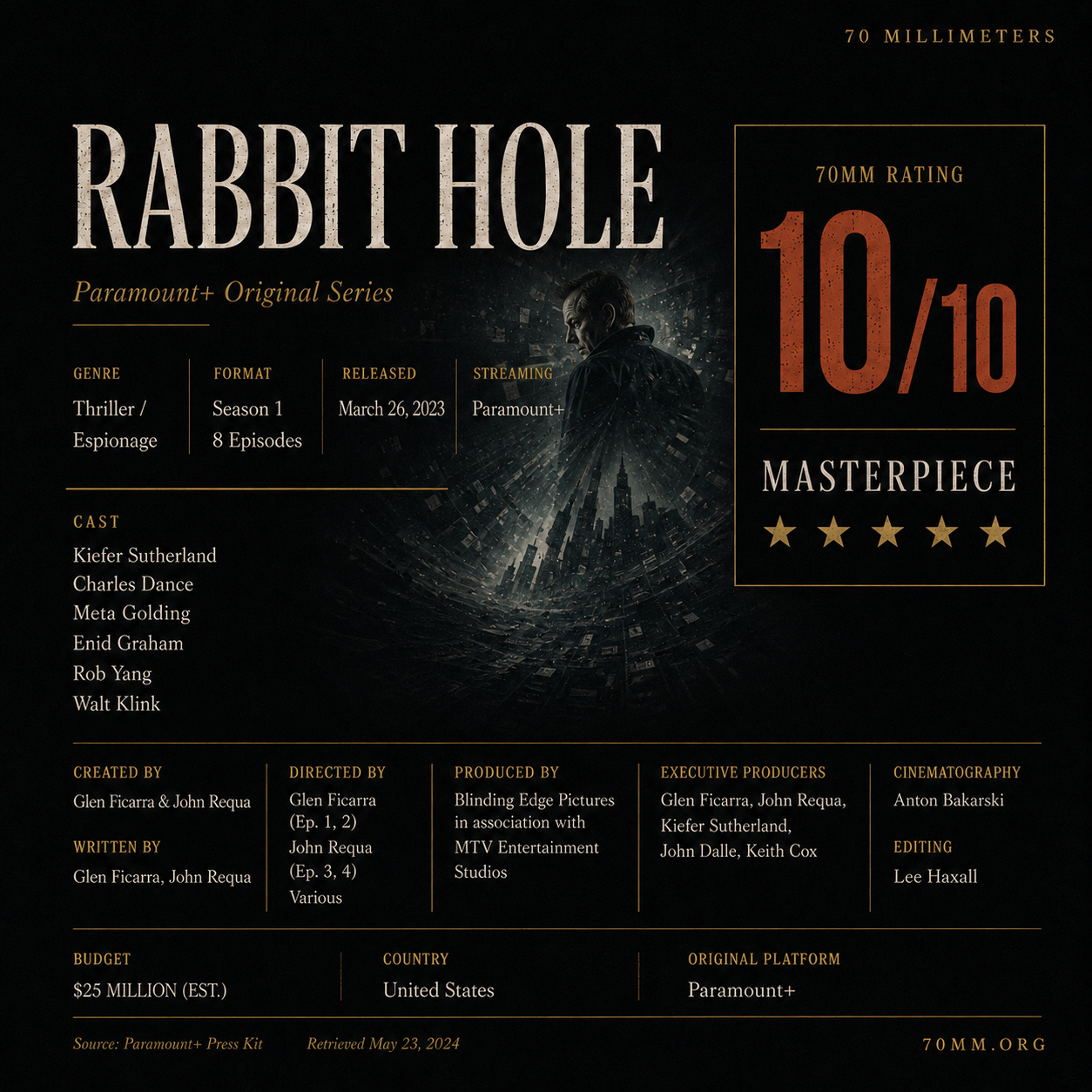
Most thrillers think a twist means hiding one fact from you, then revealing it at the best possible moment. You can usually feel it before it happens. The camera lingers a second too long. A character says something a little too clean. The show wants you to gasp, but your brain is already halfway there.
Rabbit Hole is different. This thing keeps shifting under your feet. Every answer opens into another room, and every room has a door you didn’t notice the first time. All while weaving in real world conspiracy elements: cyber surveillance, data harvesting, psychological profiling, political kompromat, manipulated public opinion, patsies, and modern tech money all feeding into each other.
That’s why it feels so much spookier than most conspiracy shows. The twists aren’t mere cheap trapdoors or plot devices. They’re layers that pull you deeper into the show’s real subject: how people are studied, pressured, lied to, framed, and moved into position before they understand the game being played around them. You think you’ve reached the bottom, then the floor gives out again. The frame keeps shifting. Every answer opens into another room, and every room changes what you thought the last room meant.
I love when a show makes me distrust the scene I’m watching as it happens. Who is lying? Who is being used? Who thinks they’re in control because someone profiled them well enough to let them feel that way?
That’s where Rabbit Hole separates itself from cleaner, safer conspiracy fiction. A corrupt politician is simple. A billionaire villain is simple. A blackmail file, a bot campaign, a framed man, a useful idiot, a patsy. We’ve seen those pieces before.
Rabbit Hole works because it stacks those things together into something that feels closer to real life.

Cyber surveillance feeds psychological profiling. Public opinion gets manipulated through psychological operations that look organic. Kompromat is a tool used to steer society. The old ghosts of programs like MKULTRA float around the edges.
The show also avoids the laziest modern political trap. It doesn’t tell you one side’s billionaires are cartoon demons while the other side’s billionaires are noble philanthropists with awkward tax habits. It doesn’t stop every ten minutes to assign you a team. Thank God.
Rabbit Hole shows you all the apparatus behind public manipulation: consultants, donors, intelligence people, media levers, data and information brokers, corrupted officials, and powerful men who know exactly where to press on a human being until that person breaks. There are Epstein-style shadows in the background too.
Black Mirror can feel like a clean nightmare, polished and conceptual. Rabbit Hole feels dirtier, closer to your browser history. It shows you what happens behind the scenes when a public scandal appears fully formed: heroes, villains, hashtags, outrage cycles, and a pre-written script designed to serve someone’s narrative.

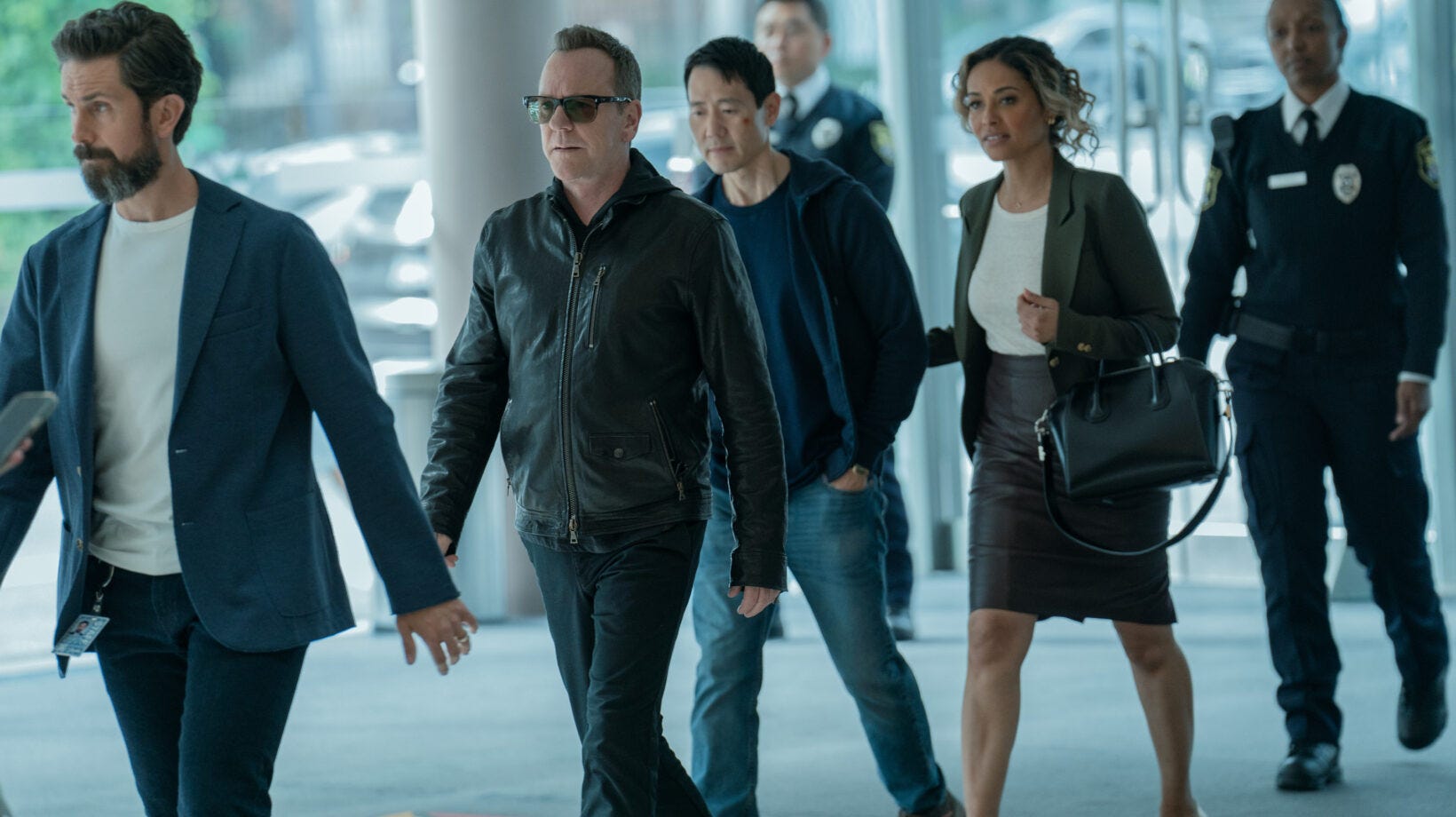
Kiefer Sutherland is perfect here. His John Weir is trying to figure out which room he’s standing in, who built it, who paid for it, and whether the person next to him is real, bought, scared, lying, or all four. Charles Dance gives the show old-spy energy. Meta Golding is endearing and sharp. Enid Graham, Rob Yang, Walt Klink, and Jason Butler Harner all fit the show’s paranoid vibe. Every face has to carry a second reading. Innocent or guilty. Cornered or baiting the trap.
The soundtrack has some interesting motifs that literally make you feel like you’re going down the rabbit hole:
But the writing is the star of the show.
Every episode turns. Then it turns again. Then the new explanation starts to rot while you’re still looking at it. The show keeps turning without becoming homework. That’s hard. A lot of twist-heavy television eventually feels like a spreadsheet with actors. Rabbit Hole avoids that trap because everything is well thought out, with strong themes and values. The show isn’t yanking the audience around for sport. It’s taking you down the rabbit hole.
I loved how NYC plays in this thing. The city gives the show compression. Elevators, offices, apartments, side streets, institutional rooms, screens inside rooms inside other rooms. Everybody looks watched. Every conversation feels like a third party is listening.
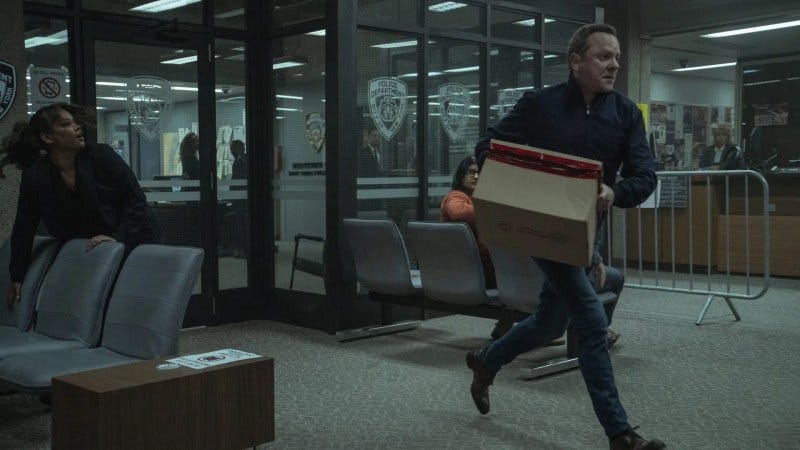
That’s what I want from this genre. I don’t want to hear that modern electronics killed the thriller. They didn’t. Use the phones. Use the cameras. Use the feeds, the records, the archives, the metadata, the little digital trail every person leaves behind while pretending they’re private.
Make the walls feel wired.
Rabbit Hole keeps the bloodline of old conspiracy thrillers alive, but modernizes it. The older themes were files, phone taps, assassinations, secret committees, and men in suits meeting behind locked doors. This show brings in behavioral data, algorithmic persuasion, digital identity, mass manipulation, and the terrifying idea that a person can be destroyed before he even understands the accusation.
I can see why this didn’t become a giant hit. It’s too twisty to market cleanly. It doesn’t have the obvious meme engine. It doesn’t flatter viewers with simple ideological comfort. Strong cast or not, this wasn’t sold as a massive prestige event with every famous actor on Earth lined up on the poster.
One season is all we got, and somehow that makes the whole thing feel more like a secret. A show that understood the present better than half the shows explicitly trying to explain the present.
I don’t need every conspiracy thriller to be logistically realistic in the boring sense. I need it to feel spiritually accurate.
Rabbit Hole does.
The lies, pressure points, manipulations, and human weaknesses all feel plausible in the way that makes you laugh a little less as the episodes go on.
I finished it buzzing.
It fit my brain, one that’s seen every type of conspiracy and finds most modern takes on them boring. The speed, the paranoia, the distrust, the feeling that every answer is bait and every person is carrying a secret.
You go down the rabbit hole.
Then you keep going.