


As I keep going through old Hollywood classics on the Paramount+ catalogue, I can’t help but feel old movies are becoming historical artifacts. Every year that passes, the films from before cellphones become more of a novelty. They’re windows into a world that moved differently. People looked at each other. Nobody checked their phone mid-conversation. The pace of life on screen in a 1996 movie is an anthropological tool. I love absorbing that energy by watching through osmosis.
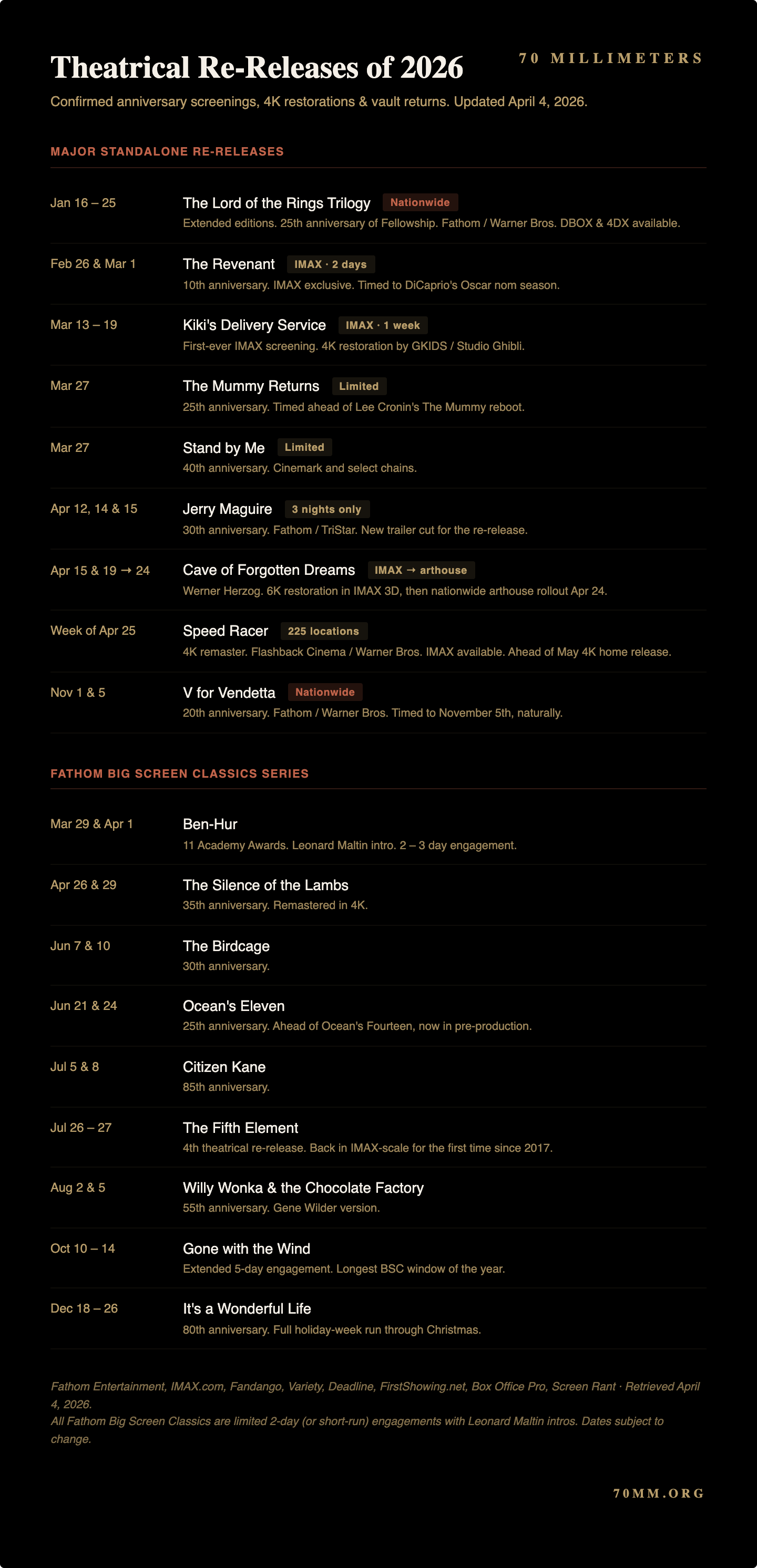
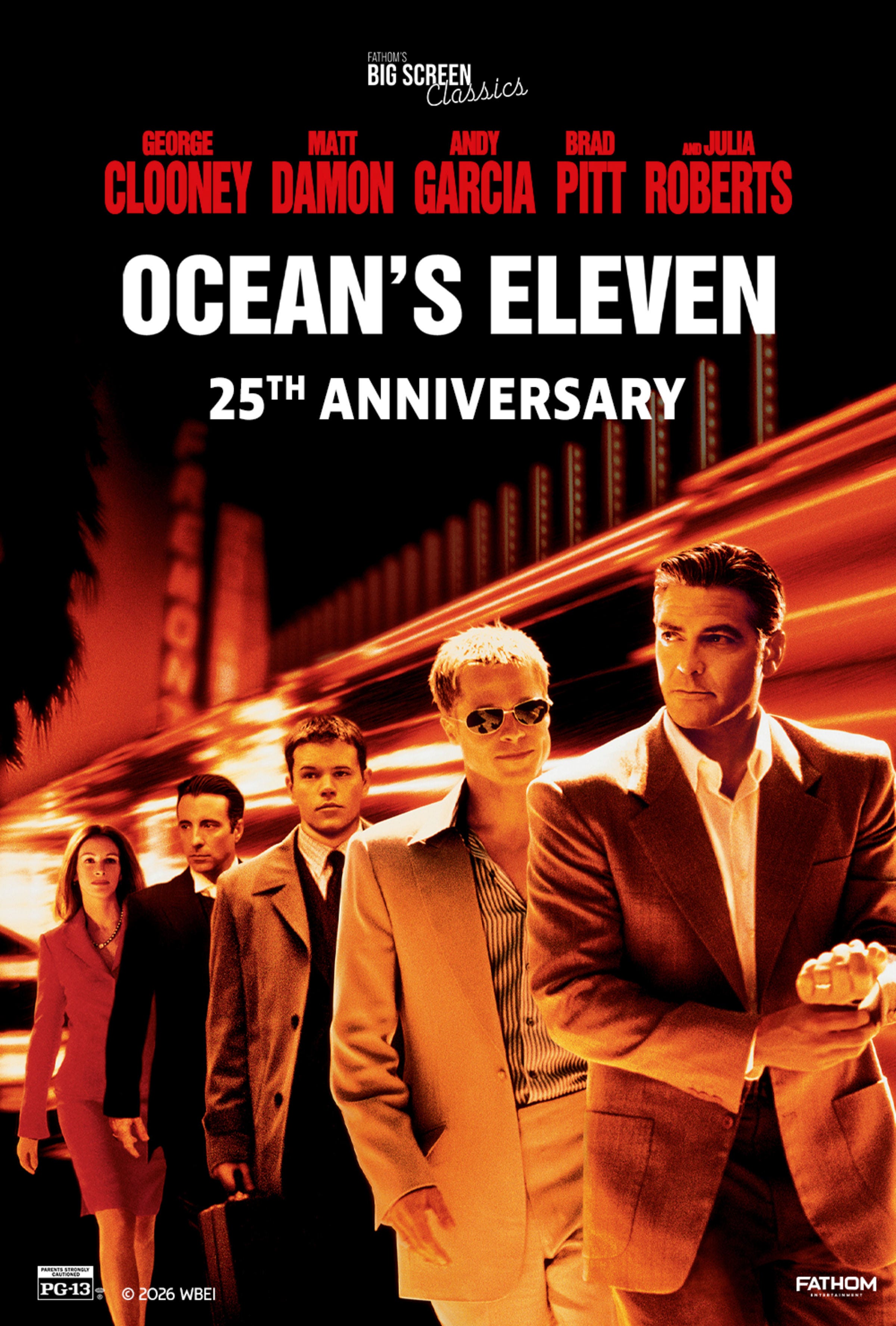
The best way to feel this is in a theater. I saw The Lord of the Rings: The Two Towers extended cut on the big screen recently. Phenomenal experience. Interstellar in IMAX 70mm last year was an event. Top Gun: Maverick will been one whenever they get around to it. But the re-releases that hit hardest are the ones that transport you to a time you either barely remember or never got to experience. Jerry Maguire is back in theaters April 12th for its 30th anniversary. Three nights only. Ocean’s Eleven returns June 21st for its 25th. I’m going to both. I plan on getting dressed up and pretending I’m at the original premiere.
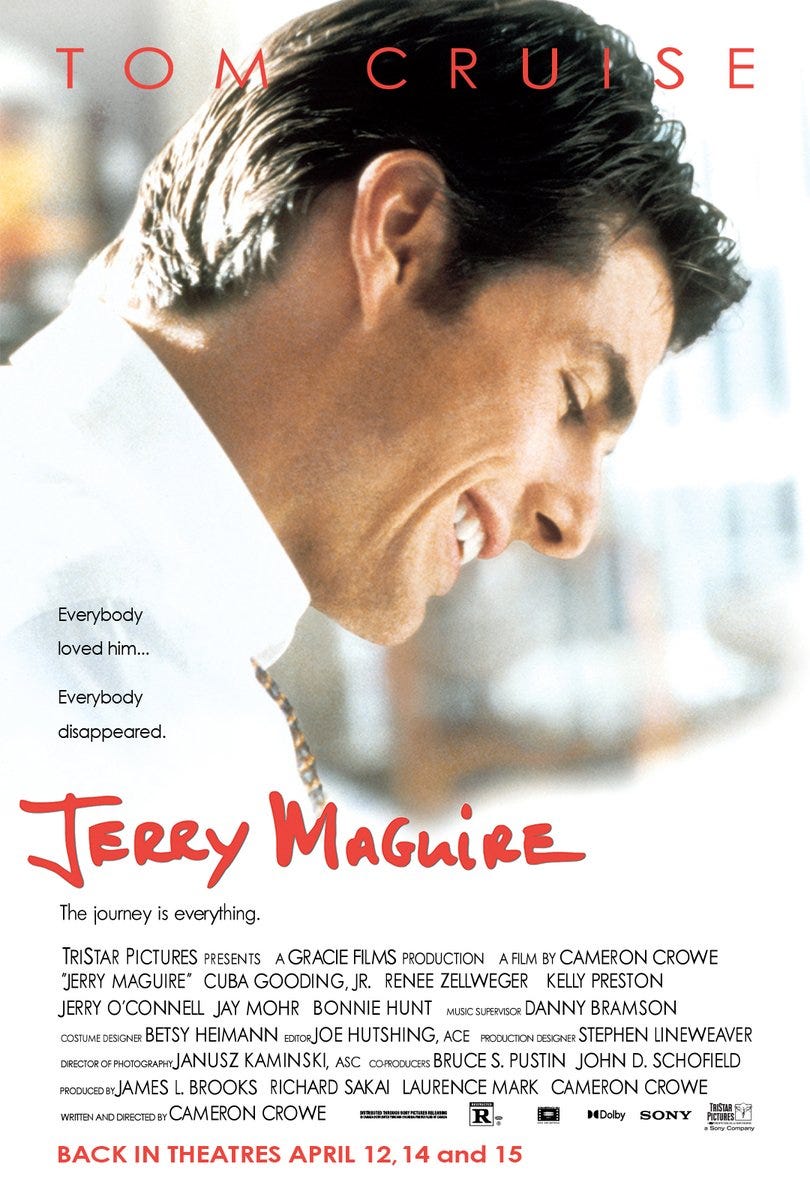
There’s a communal memory thing happening here that I think matters. Some of your parents saw Jerry Maguire opening weekend in ‘96. You see it thirty years later in the same kind of darkened room with the same film playing. Now you share a movie memory across a generation.
There’s something about sitting in a dark room for two and a half hours, no phone, one story, one thread from start to finish, that rebuilds something in your brain. In a world where almost everyone has chronic, low-grade ADHD, you can feel your attention span repairing itself in real time. Movies are among the best social experiences we can still have that involve electronics. Better than video games, which offer community but are engineered for addiction and carry real cognitive strain (e-sports exempted, those people earn a living. And some single-player role playing games are exempted for their artistic qualities as well). Better than watching sports, honestly, which give you the rush of competition wrapped in a product full of inconsistencies and officiating disasters worse than the worst plot hole you’ve ever seen in a movie. A movie is clean. It has a beginning, a middle, and an end, and someone thought through all three.

Not every new release earns its theater ticket. We all know this. Some weekends you look at what’s playing and nothing justifies the drive, the parking, the $20-30 including food and drink. Re-releases solve that problem elegantly. They guarantee that at any given time, a percentage of the theatrical catalogue is proven, quality, nostalgia-tested material. They don’t oversaturate because they’re limited runs. They play to our desire for cozy nostalgia without flooding the market. And from the studio side, the economics are incredible. No $200 million production budget, no press tour. The audience is pre-built. It’s nearly pure margin on screens that would otherwise sit half-empty on a slow weekend. Studios leaving this money on the table is one of the stranger business decisions in entertainment.
I think about this more broadly. We live in a world where the default leisure activity is some form of low-grade self-medication. Vaping. Edibles. Four hours of a TV series you half-watch while scrolling Instagram reels on your phone. Weed culture went from counterculture to commonplace. People are more isolated than ever and calling it introversion. The average person’s evening is a rotating menu of dopamine hits that require nothing from them and give back even less. A movie asks you to show up. To sit with other people, commit to a single narrative, feel something on someone else’s schedule, and walk out having shared an experience with strangers. That’s increasingly rare. Going to a theater is one of the last social rituals that doesn’t revolve around consumption on a screen you control. You surrender the remote. And the thing I keep noticing is that I feel genuinely better afterward.
Which brings me to Paramount+.
I’ve been deep in their catalogue lately and it’s remarkable. The Firm. The Rainmaker. The Talented Mr. Ripley. They just added Primal Fear on April 1st. Road to Perdition is on there. These films share a quality I can only describe as old American cinematic energy: studios that trusted grown-up stories, directors obsessed with craft, productions that made things look beautiful because beautiful was worth the effort. There is a texture to these movies that you don’t find in the straight-to-streaming flicks like RIP or The Gorge, films built around recognizable names and engineered for audience capture. Those are products. The Paramount catalogue is full of movies that feel like they were made. You can feel the care in the lighting of a room, the argument over the right lens for a courtroom scene. You can tell the difference.

I missed The Revenant when it got a re-release, and I’m a little annoyed about it. There are so many more opportunities here. A Few Good Men and The Nice Guys are playing in my area this year too. Studios are sitting on decades of films that audiences would pay to see projected properly, to remind people that the theatrical experience has always been worth protecting when there’s actual quality behind it.
As you know, Paramount is acquiring Warner Bros. Discovery for roughly $111 billion, with the deal expected to close this fall. The WBD shareholder vote is set for April 23rd. David Ellison’s Paramount is absorbing everything: HBO, Warner Bros. Studios, DC, CNN, Turner Classic Movies, the whole portfolio. Think about what that combined catalogue looks like. Paramount’s legal thrillers and Grisham adaptations living next to Warner’s heist films and prestige dramas. The Firm next to The Departed. Road to Perdition next to Goodfellas. The merger gives one entity control over an almost absurd concentration of American cinema’s greatest hits. And tucked inside that WBD portfolio is Turner Classic Movies, a brand with decades of expertise in curation, preservation, and programming classics. If Ellison’s team is smart about it, and that’s a real if, TCM becomes the engine for both the streaming catalogue and the theatrical re-release pipeline. This could mean the deepest, best-curated library anyone’s ever assembled, and a steady supply of proven films keeping theaters alive on weekends when new releases don’t show up.
I feel like there was something healthier about the world before everyone had a screen in their pocket. I don’t romanticize it blindly. I just notice that the movies from that era hit different, and sometimes watching them is the closest I’ll get to visiting that world. You sit in the dark, the lights go down, your phone is away, and for two hours you live in a version of reality where people are present with each other. Stories take their time, and craft matters for its own sake.
That’s what the Paramount catalogue has been giving me. And if the merger means more of it, in better quality, on bigger screens, with a company that actually understands what it’s sitting on? I’ll take that bet.
Jerry Maguire. April 12th. I’ll be there.